
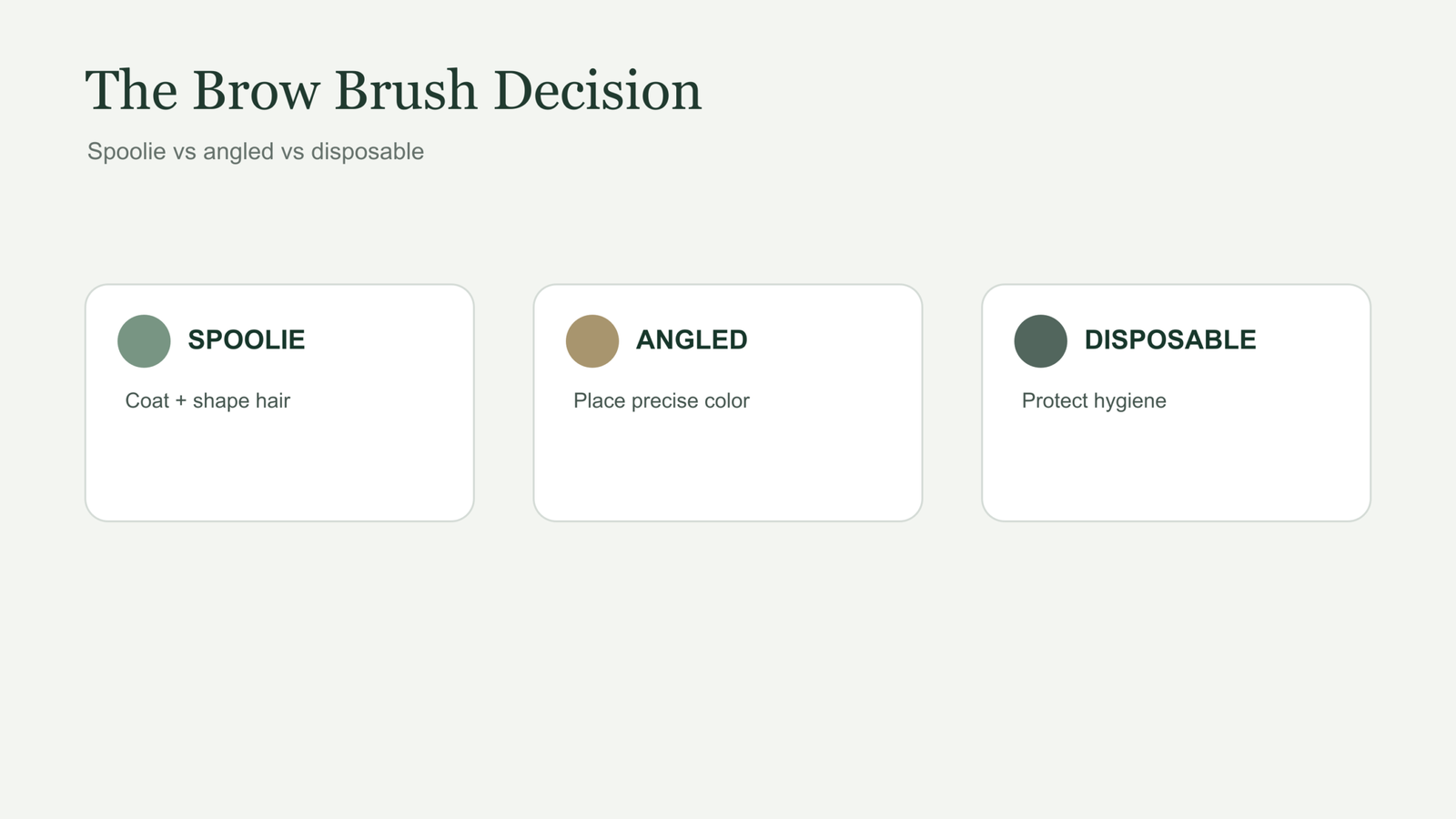
The best brush for most brow gel is a small, firm spoolie. It coats hair from several sides and shapes in one pass. Choose a thin angled synthetic brush for gel pots, pomades, or precise tinted placement. Use a fresh disposable spoolie for testers, clients, shared kits, or anytime cross-contamination matters.
Eyebrow Gel Brush Guide
Eyebrow Gel Brush Guide: Types Explained
A spoolie, angled brush, and disposable wand are not three versions of the same tool. They solve different application problems. This eyebrow gel brush guide separates them by what touches the formula, where product lands, and how much control you get.
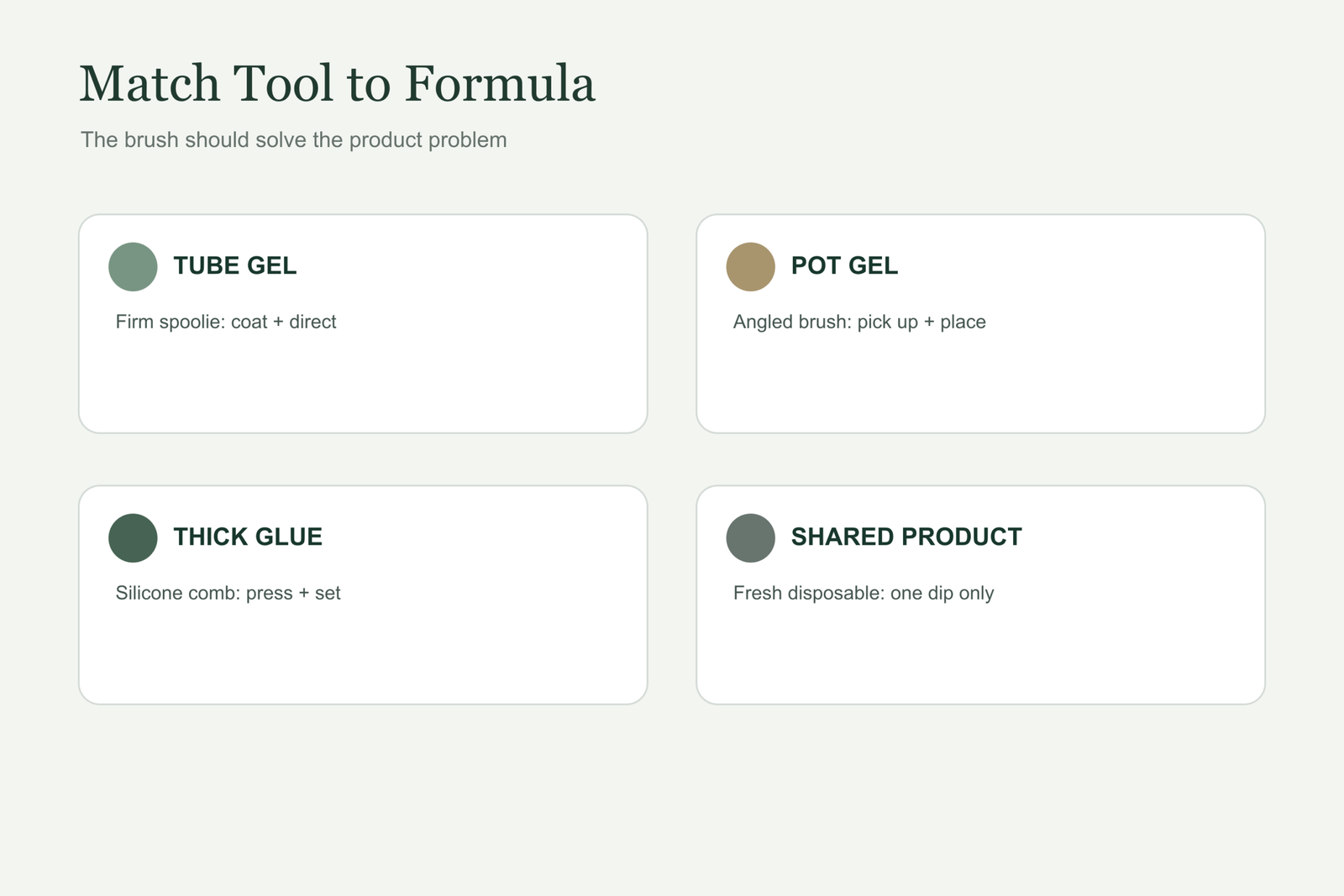
| Tool | Best with | Main job | Common mistake |
|---|---|---|---|
| Firm spoolie | Clear or tinted tube gel | Coat and direct hair | Pressing gel onto skin |
| Thin angled brush | Pot gel, pomade, concentrated tint | Place edges and hair-like marks | Drawing one solid border |
| Disposable spoolie | Tester, shared kit, cleanup | Hygienic separation | Double-dipping |
| Silicone comb | Thick glue or wax-gel | Press and laminate | Using too much pressure |
Bristle density changes the result. A dense, short spoolie gives more tension and stronger direction to coarse hair. A longer, softer spoolie diffuses tint and leaves a fluffier finish. A stiff angled edge draws narrower marks; a soft edge spreads color faster but sacrifices precision.
Synthetic versus natural bristles
Synthetic bristles are the practical choice for wet brow products. Their smooth fibers absorb less gel than many natural hairs, so more formula reaches the brow and cleanup is easier. They also hold a crisp angled edge well. A natural-hair brush can work with powder, but it offers no clear advantage for sticky gel.
Check the ferrule before buying. Wiggle the spoolie and angled head gently. A loose joint changes pressure during application and eventually separates. In an eyebrow gel brush guide, durability matters because dried hold polymer requires regular washing.
The eyebrow gel brush guide rule here is to match brush tension to hair resistance, then match the brush edge to the area you need to control.
Spoolie Brush: Best Uses and Techniques
A spoolie is the default choice in this eyebrow gel brush guide because its spiral bristles reach around brow hairs. It works best for clear gel, lightly tinted gel, fluffy brows, and blending pencil before setting.
Wipe one side of the wand at the tube neck. Start at the middle of the brow, where extra product is less obvious. Brush against growth once to coat the underside, then immediately turn upward and outward. Use what remains for the sparse front. This back-brush method adds coverage without loading the first few hairs.
A small spoolie suits sparse or short brows because it limits skin contact. A full-length spoolie moves faster through dense brows. For more application detail, see our beginner eyebrow gel tutorial.
For everyday clear gel, the eyebrow gel brush guide recommendation remains a medium, firm spoolie with enough space between coils to release excess product.
Choose spoolie size by brow density
Use a micro spoolie when the front is sparse, the tail is narrow, or a tinted gel stains skin easily. Choose a medium head for most brows. A large mascara-size wand is fast on dense hair but can overload the upper edge. The best eyebrow gel brush guide advice is simple: the brush should fit inside the brow outline without constant correction.
Angled Brush: Best Uses and Techniques
An angled brush is better when placement matters more than combing. Use one with gel in a pot, a highly pigmented formula, or a sparse tail that needs precise color. Official brush guidance from NYX and Anastasia Beverly Hills follows the same division: angled fibers apply product, while the spoolie blends and shapes.
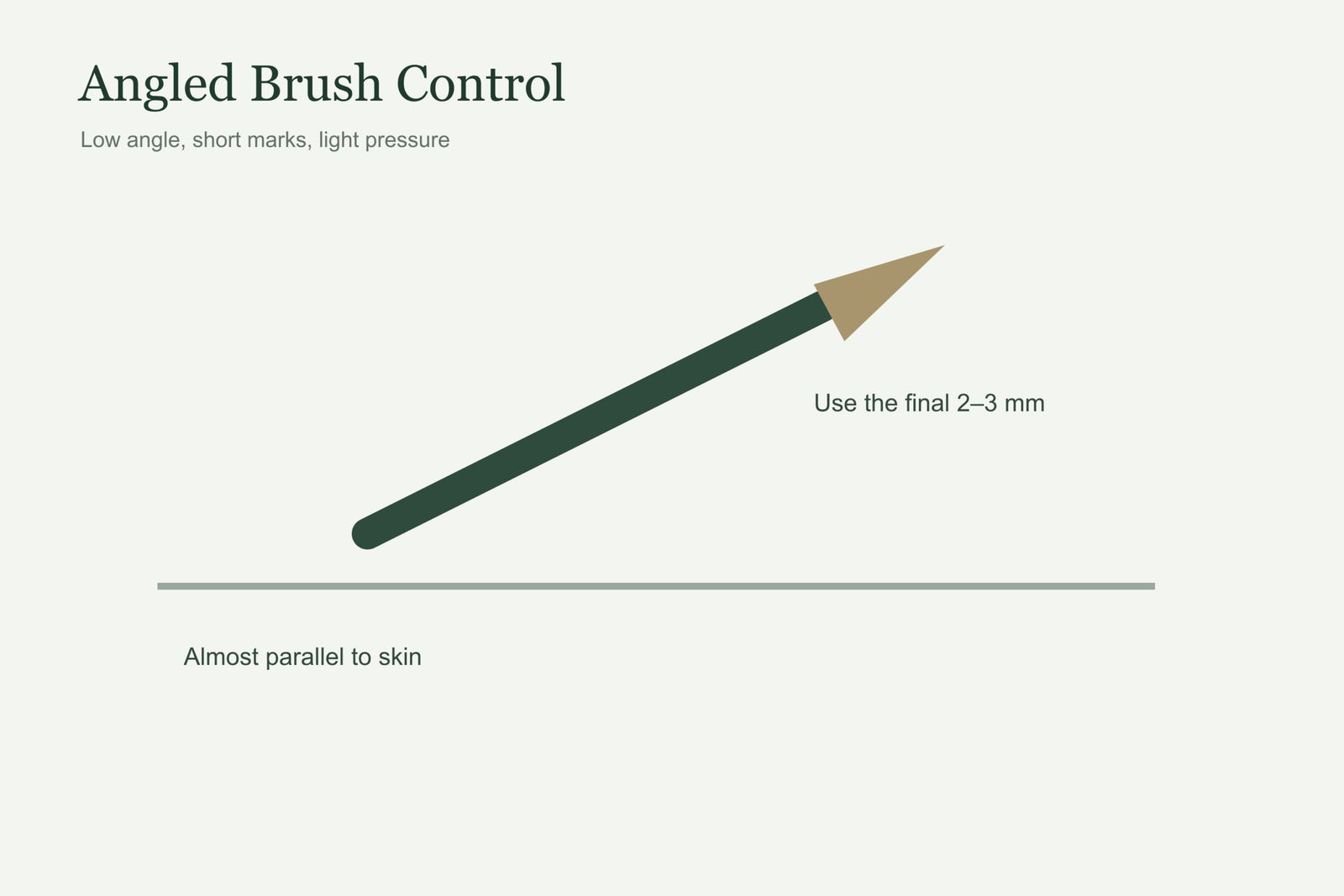
Load only the final 2 to 3 millimeters of the edge, then press both sides against a clean palette or tissue. Hold the brush almost parallel to the skin. Stamp short marks through gaps instead of dragging one continuous line. Turn the point toward the tail for a narrow finish.
Finish with a separate clean spoolie. If you comb too hard, you can erase the marks you just placed. Roll over the surface rather than digging down to skin. For five finished styles, use our advanced eyebrow gel techniques.
For tinted pot formulas, the eyebrow gel brush guide recommendation changes to a thin synthetic angle plus a clean spoolie for diffusion.
Disposable Brushes: When and Why
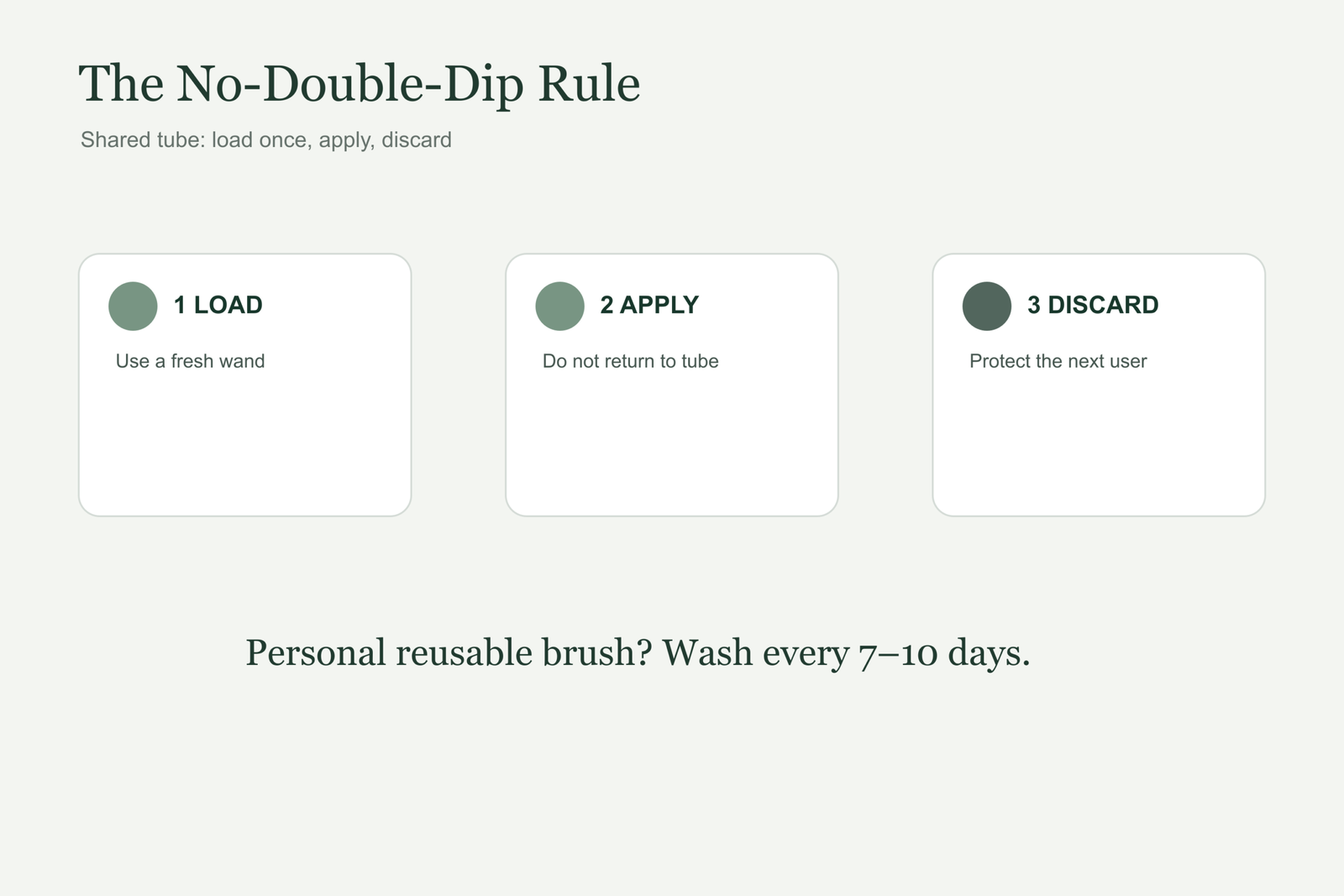
Disposable spoolies make sense when a tool may move between people or touch a public tester. The FDA notes that applicators can be exposed to bacteria and fungi and advises using a new, unused applicator when testing cosmetics. Never dip a used disposable wand back into a shared tube.
For personal use, “disposable” does not mean better application. A well-made reusable spoolie is cheaper over time and creates less waste. Keep disposables for sanitation boundaries: clients, testers, makeup swaps, travel emergencies, or separating a questionable product from your main brush.
If you decant gel onto a clean palette, use one disposable spoolie to remove product and a second to apply it. That prevents a used tool from returning to the original container. This eyebrow gel brush guide does not recommend spraying alcohol onto a dirty wand and calling it clean; visible gel and debris must first be removed.
How to Hold a Spoolie Correctly
Hold the handle near its middle, not at the brush head. A grip too close to the bristles increases pressure and pushes tint onto skin. A grip near the end gives softer movement but less control. The middle lets your fingers absorb small changes in the brow bone.
- Keep the spoolie nearly parallel to the brow so bristles contact hair, not the skin underneath.
- Use the tip at the front and tail; use the full side through the body.
- Rotate the handle slightly as you move so clean bristles continue meeting the hair.
- Shape before the hold polymer sets. Repeated brushing after dry-down causes flakes.
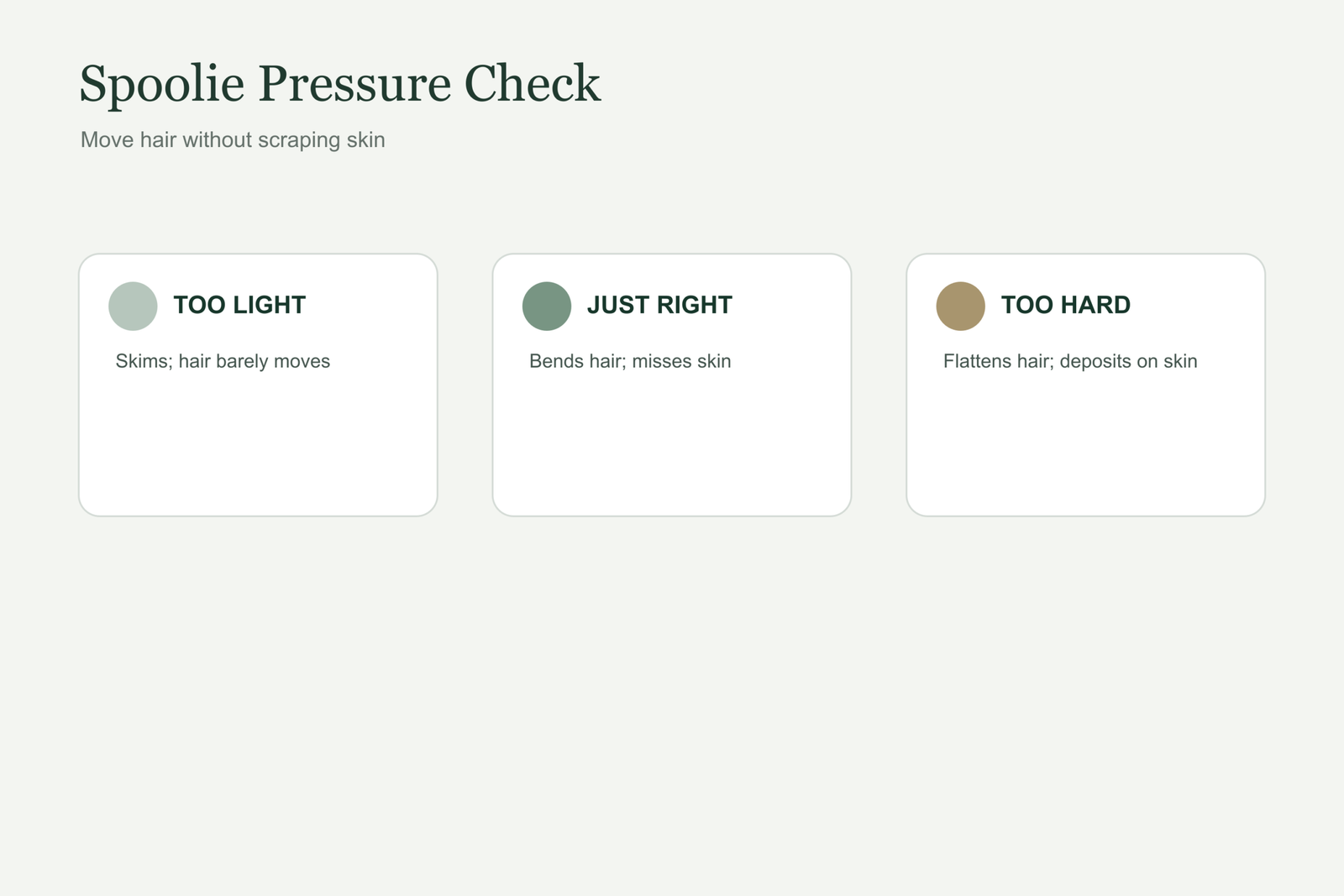
The 15-second brush diagnosis
Brush a clean brow upward without product. If hair separates but springs back, you need a denser spoolie or stronger gel. If the tool scratches skin, the bristles are too stiff or your angle is too vertical. If it skims without moving hair, choose shorter, firmer bristles.
How to Clean Your Brow Brush
Gel residue hardens between spoolie coils and changes how much product the tool deposits. Cleaning is therefore a performance step as well as a hygiene step. The American Academy of Dermatology recommends washing makeup brushes every 7 to 10 days.
- Wipe fresh gel from the bristles immediately after use.
- Rinse only the bristle tip under lukewarm water; avoid soaking the ferrule or handle.
- Massage with gentle shampoo until the water runs clear.
- Press out water with a clean towel without twisting the shape.
- Lay the brush flat with the tip over an edge to dry. Upright drying can send water toward the glue.
Wash sooner after illness, eye irritation, or heavy wax buildup. Do not share a reusable brush. Replace it when bristles become sharp, permanently bent, loose, or impossible to clean.
A clean tool is the control sample in any eyebrow gel brush guide: it shows whether clumping comes from the formula or residue trapped in the bristles.
What not to do while cleaning
Do not soak the full handle, boil synthetic bristles, dry the tool with direct heat, or pull hardened gel out with your fingernails. Those shortcuts distort the spiral or loosen adhesive. If warm water and gentle shampoo cannot restore separation, replacing the brush is safer than forcing it.
Eyebrow Gel Brush Guide: Best Tools to Buy
You do not need an expensive kit. The best purchase depends on the formula already in your drawer. Our eyebrow gel brush guide shortlist uses design and stated use, not fabricated hands-on testing.
- Best one-tool option: NYX Pro Dual Brow Brush. A flat angled end for gel or pomade plus a spoolie for blending.
- Best firm precision option: Anastasia Beverly Hills Brush 12. Dense synthetic angled fibers suit pomade and concentrated gel.
- Best slim angled option: Anastasia Beverly Hills Brush 7B. A tapered edge favors narrow tails and powder-to-gel layering.
- Best multipurpose design: Tweezerman Angled Brow Brush & Spoolie. A straightforward dual-ended format for filling, grooming, and gel setting.
- Best hygiene supply: individually wrapped disposable mascara wands. Choose lint-free nylon heads and use once with shared products.
A two-brush kit is enough
For most people, the useful kit is one washable dual-ended angled brush and one clean standalone spoolie. Apply or define with the first, then reserve the second for removing excess and finishing. This eyebrow gel brush guide setup works across tube gel, pot gel, pencil, and powder without turning one narrow task into a drawer full of tools.
If you are also choosing the formula, start with our best eyebrow gel guide. The tool can improve placement, but it cannot turn a flexible gel into maximum hold.
The final eyebrow gel brush guide test is simple: the tool should place less product more accurately, not create another correction step.
Frequently Asked Questions
What brush should I use with eyebrow gel?
Use a small firm spoolie for tube gel and general shaping. Use a thin angled synthetic brush for gel pots, precise tint, or sparse tails.
The shortest eyebrow gel brush guide answer is spoolie for hair, angled brush for gaps, and disposable wand for shared-product hygiene.
Is a spoolie or angled brush better for brow gel?
A spoolie is better for coating and directing hair. An angled brush is better for placing concentrated product on specific gaps. Many routines benefit from both.
Can I use a mascara wand as a brow spoolie?
Yes, if it is clean and used only for brows. Never move a used mascara wand between an eye product and brow gel.
How often should I clean a brow brush?
Wash reusable brow brushes every 7 to 10 days, following AAD guidance, and sooner when gel or wax visibly accumulates.
Are disposable spoolies reusable?
Treat them as single-use when working from a shared tube or tester. For personal use, choose a washable reusable spoolie rather than repeatedly using a tool not designed for cleaning.
Why does my brow gel flake when I brush it?
You may be reshaping after the gel film has set. Use less product, complete the shape while wet, and stop brushing once the hairs hold.
Editorial note: Product recommendations are based on brush design, manufacturer instructions, and hygiene guidance. No affiliate links have been added.