
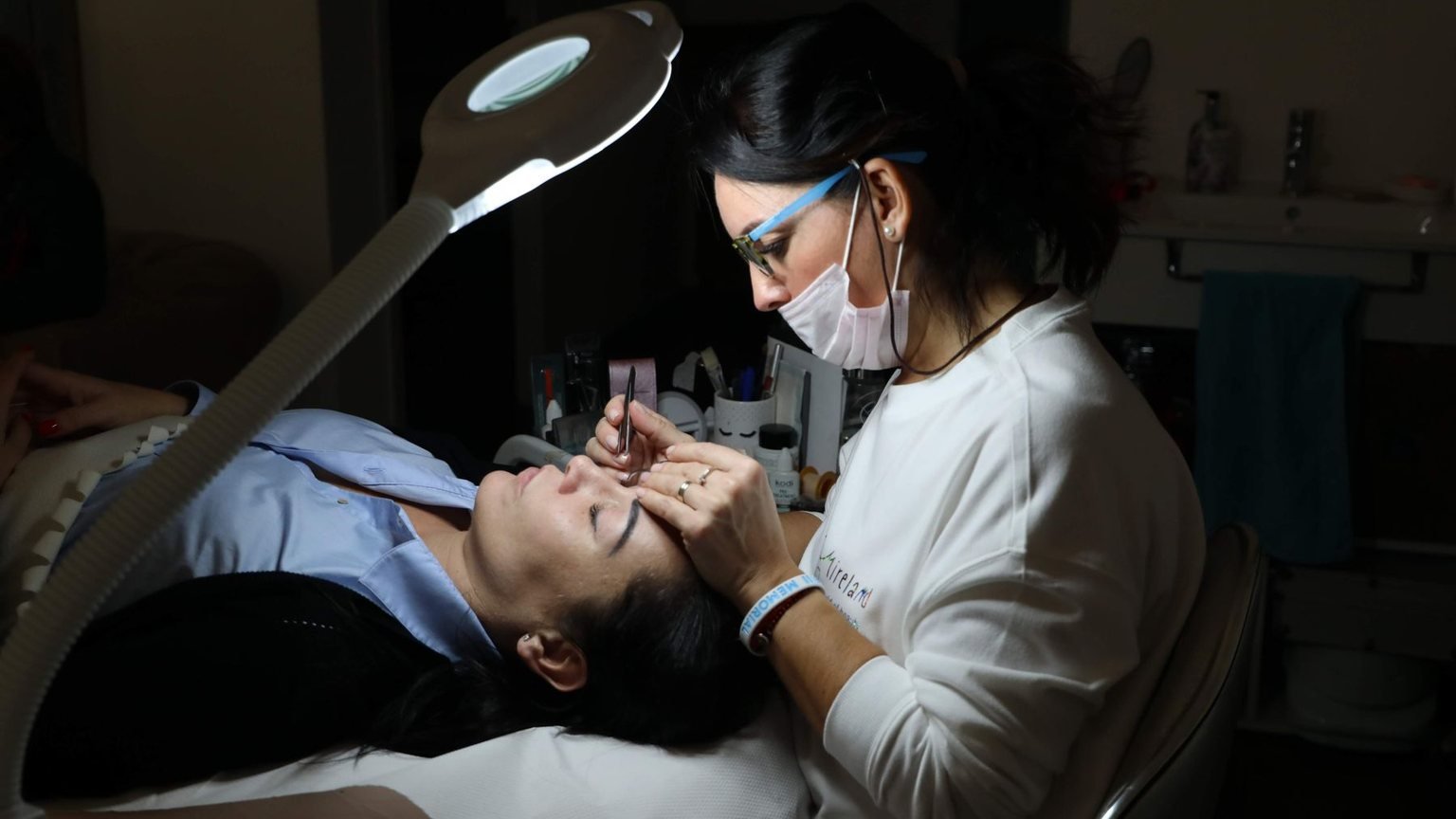
A professional brow stain colors brow hair and deliberately leaves temporary pigment on the skin beneath it. That skin effect is what separates many hybrid stains from a softer traditional tint. Henna systems may also stain both surfaces, but the finish, undertone, and fade pattern depend on the exact formula.
This professional brow stain guide is built around a two-clock rule: judge the skin result in days and the hair result in weeks. It also explains which questions reveal more than a fresh salon photo.
- “Stain,” “tint,” and “hybrid dye” are not standardized service names across every salon.
- Ask whether the product colors hair, stains skin, or intentionally does both.
- Advertised longevity is a range affected by formula, skin oil, cleansing, shade, and hair turnover.
- Never substitute ordinary scalp or beard dye for a brow-specific product near the eyes.
Professional Brow Stain Guide
Professional Brow Stain Guide: What Is a Brow Stain?
A brow stain is a color service designed to leave visible pigment on brow hair and, in many systems, the skin. The skin effect can make sparse areas look filled without daily pencil. It is temporary and should not be confused with microblading or permanent makeup, which place pigment through a different process.
The confusing part is vocabulary. One salon may call a product “hybrid dye,” another “stain,” and a third “long-lasting tint.” Those names do not tell you the active color system, whether the skin is intentionally stained, or who the product is designed for.
Use the professional brow stain guide test instead: ask for the exact product name, whether it is intended to color skin, and what the provider expects to remain after the first week. That turns a vague service label into three checkable answers.
Brow Stain vs. Tint vs. Henna: Key Differences
Traditional brow tint mainly deepens the color of existing hair. Hybrid stain is selected when the client also wants a defined skin imprint. Henna-based systems can create both effects, although the ingredients and undertones vary widely between products.
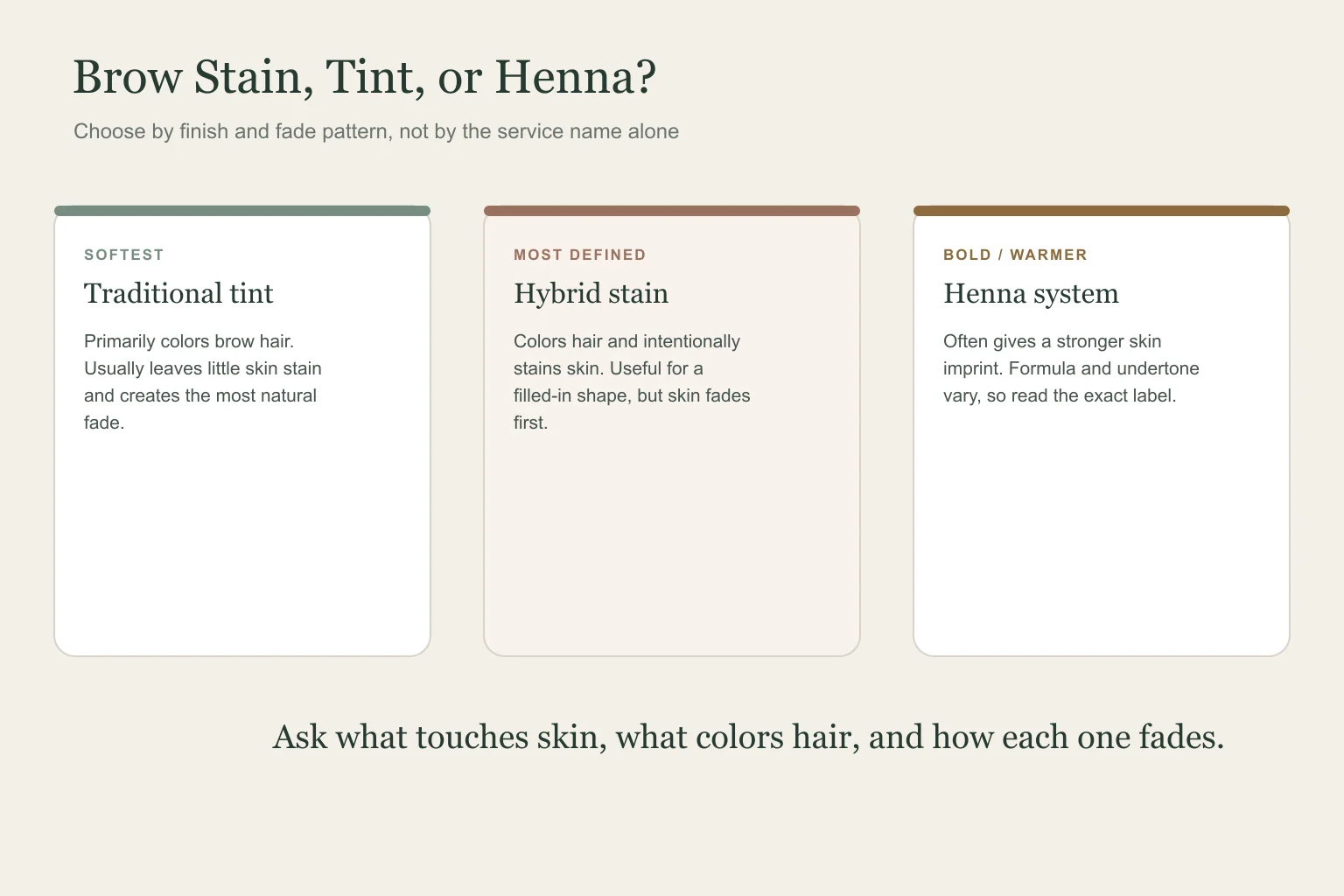
| Method | Primary visual effect | Best fit | Main tradeoff |
|---|---|---|---|
| Traditional tint | Deeper hair color, little skin imprint | Full brows needing softer definition | Does not fill bare skin convincingly |
| Hybrid stain | Hair color plus makeup-like skin shading | Sparse areas and a defined outline | Skin can fade sooner or less evenly |
| Henna system | Often a stronger skin stain with colored hair | Clients who want visible density | Undertone, formula, and suitability vary |
The professional brow stain guide comparison is not a ranking from weak to strong. A softer tint can be the better result when the brow already has density. A strong skin stain can look precise on day one but more obvious as it fades around oily areas.
Our eyebrow tinting guide covers the broader home-versus-salon tint decision. This page focuses on professional stain systems, skin imprint, and fade behavior so the two articles do not compete for the same answer.
How Long Does Each Last?
For longevity, this professional brow stain guide separates pigment on skin from color on hair. Industry pages commonly advertise skin wear in days and hair color in weeks. Those are brand or provider ranges, not independent guarantees.
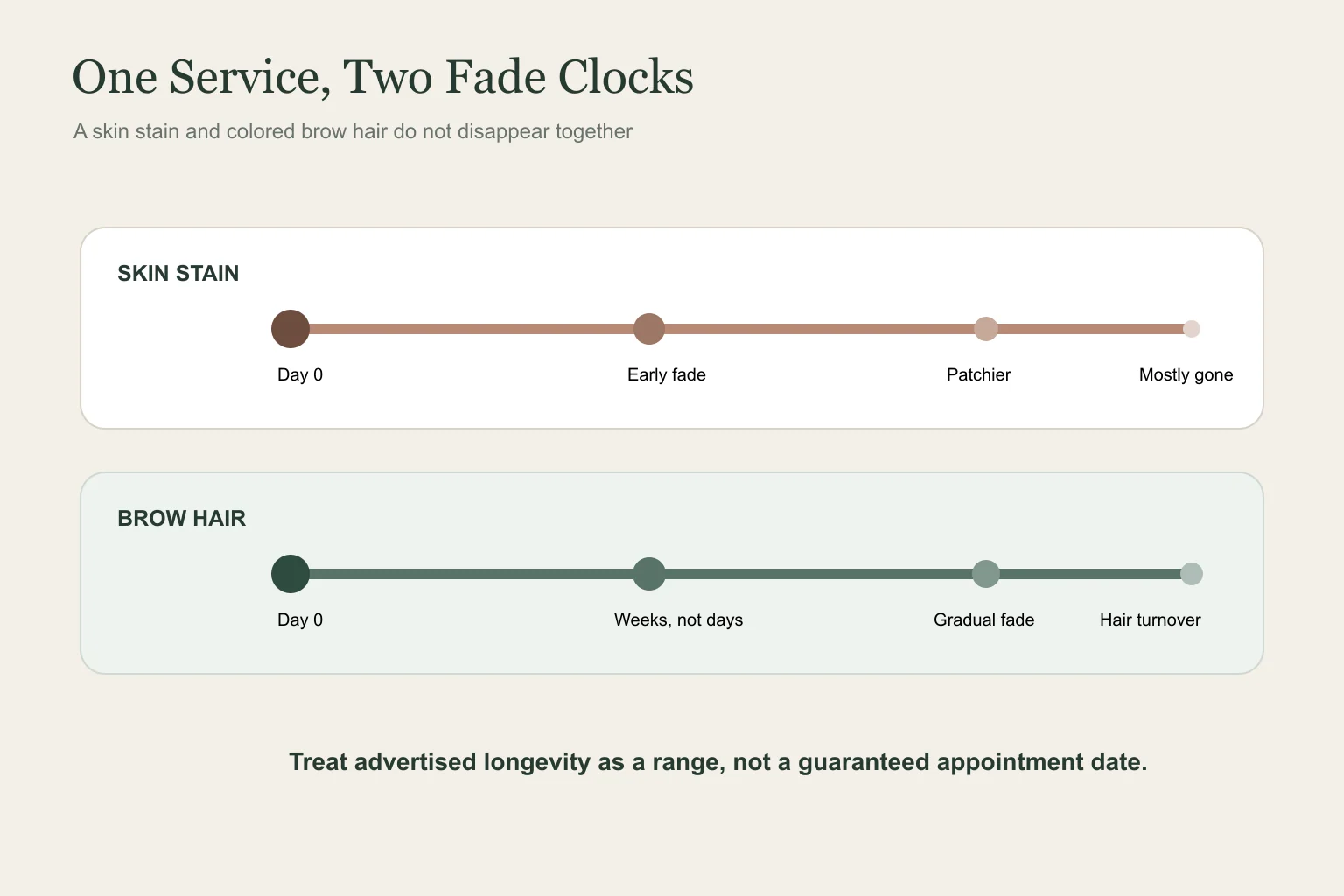
The professional brow stain guide rule is to request two estimates. Ask, “How long should the skin imprint remain?” Then ask, “How long should the brow hair stay visibly colored?” If the answer gives one large number without separating them, it is not precise enough.
Skin oil, cleansing, exfoliating products, sweat, shade depth, and application uniformity can change the visible skin result. Hair color also fades with washing and natural turnover. A lighter shade may appear gone sooner even when some pigment remains.
Salon Brow Staining: What to Expect
The salon section of this professional brow stain guide begins with consultation, not color. The provider should discuss the finish, evaluate the brow and surrounding skin, explain the product, and follow its allergy-screening and timing requirements. Mapping and product placement come after those decisions.
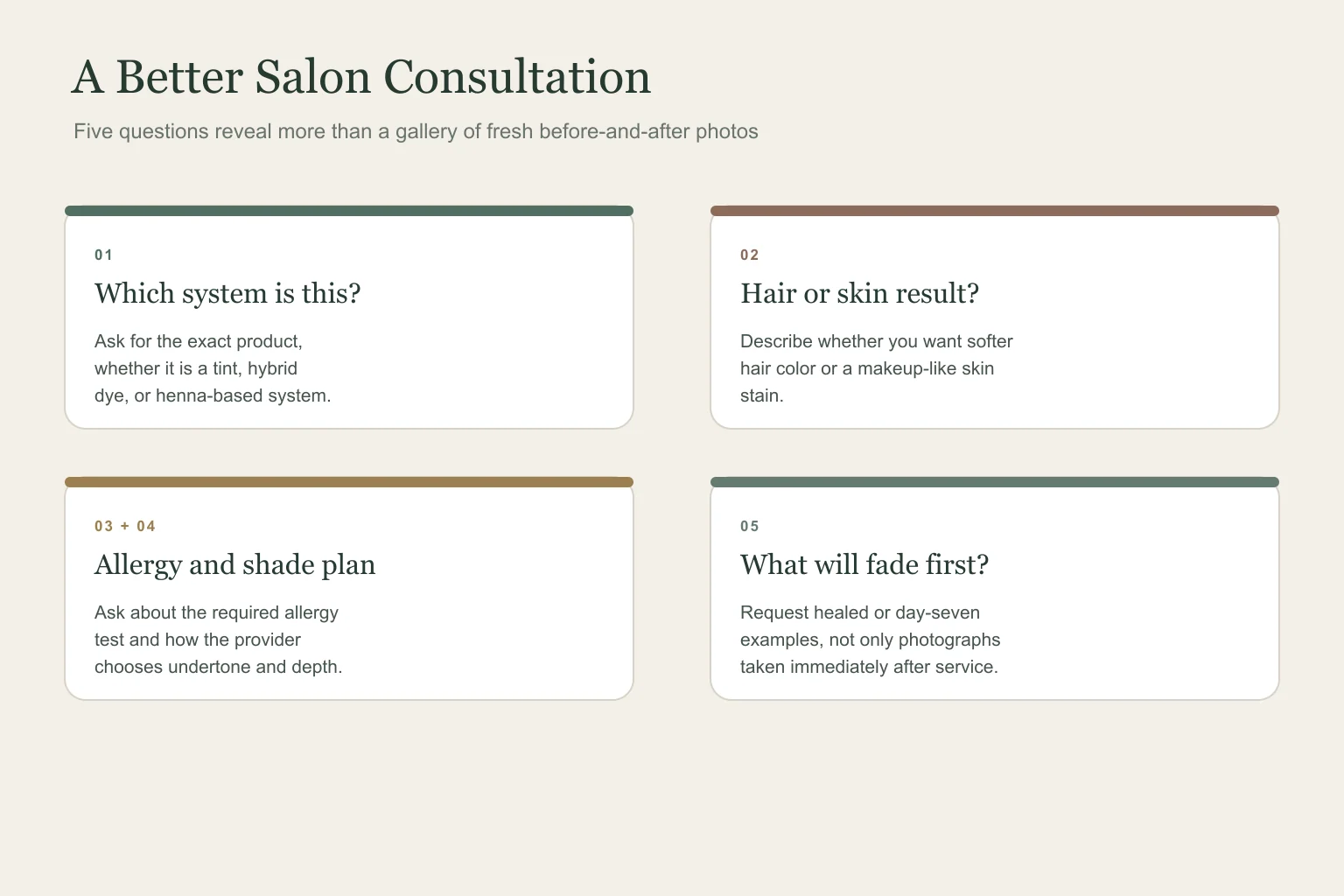
Bring one reference showing the intensity you like and another showing what feels too strong. Describe the front, arch, and tail separately. Many people want a soft front with more defined sparse areas, not one identical block from end to end.
A useful professional brow stain guide also includes an exit question: “What should make me contact you after the service?” Normal fading is different from persistent redness, swelling, blistering, or eye symptoms. Seek appropriate medical care for a significant reaction rather than waiting for a beauty appointment.
What to record after the appointment
- Exact product and shade or shade mixture
- How the skin looked after the first permitted cleanse
- Whether the front and tail faded evenly
- The first day you wanted makeup again
- Any irritation and when it appeared
At-Home Brow Stain: A Label-Led Process
Safety boundary for U.S. readers: the FDA defines the eyebrow as part of the eye area and says color additives require specific approval for that use. Its hair-dye guidance warns against using ordinary coal-tar hair dye on eyebrows or eyelashes. Do not substitute scalp or beard dye.
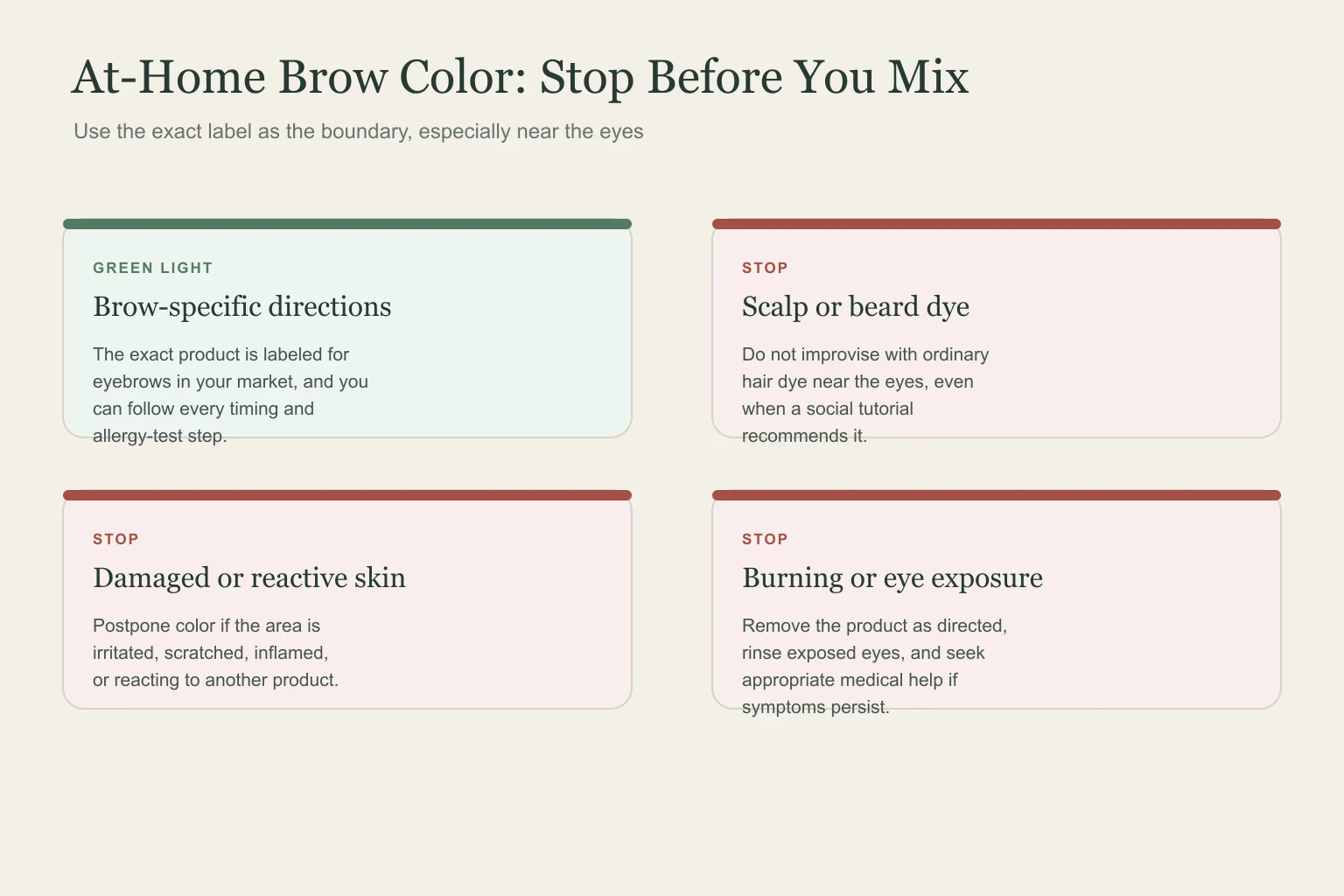
For home use, this professional brow stain guide provides process guardrails, not replacement instructions for a specific formula:
- Confirm intended use. Use only an exact product labeled for eyebrows in your market. “Professional” does not mean safe for untrained home use.
- Read every warning first. Complete the product’s required allergy test each time and within its stated timing window.
- Check the skin. Postpone use on irritated, scratched, inflamed, or recently reacted skin.
- Map before mixing. Decide the boundary with a clean, dry spoolie so processing time is not spent improvising the shape.
- Follow the package exactly. Do not change ratios, extend timing, combine systems, or use a stronger developer.
- Stop when symptoms begin. Follow removal guidance immediately for burning, swelling, or eye exposure and obtain medical help when needed.
If the directions are missing, unclear, translated poorly, or designed only for licensed professionals, that product is not a sensible first home experiment.
Best Brow Stain Kits to Compare
The product section of this professional brow stain guide is a format shortlist rather than a fabricated ranking. We have not performed comparative wear testing on these systems. Product details come from current official pages, and no affiliate links have been added.
- WONDERSKIN Wonder Blading Brow Stain & Go Masque: a consumer cosmetic stain in Blonde, Brunette, and Dark Brunette. The brand claims up to 48-hour wear, making it a lower-commitment skin-stain option rather than a multiweek hair-color service.
- Ardell Brow Tint: a dedicated at-home brow tint sold in several brown depths and Soft Black. Compare the shade, package directions, ingredient list, and allergy-test requirements before purchasing.
- Brow Code Professional Stain Hybrid Brow Dye Kit: a professional multi-shade system intended for trained brow artists. It belongs in a salon-product comparison, not an automatic home recommendation.
The professional brow stain guide buying rule is simple: choose the product class first, then the brand. A two-day cosmetic stain, an at-home tint, and a professional hybrid dye solve different problems even when a retailer places them in one search result.
Before publication, we will request exact Amazon links and variants separately. Links will be added only after approval, with sponsored labeling and the required disclosure.
Aftercare That Supports an Even Fade
Aftercare in this professional brow stain guide starts with the provider or product instructions. Different systems specify different first-cleanse windows, and guessing can either shorten wear or leave residue longer than intended.
- Clean gently: avoid scrubbing the stained shape or repeatedly rubbing it with a towel.
- Keep strong exfoliants controlled: do not spread acids, retinoids, or exfoliating cleansers over the brow unless your instructions allow it.
- Expect the skin to change first: a softer imprint does not mean the hair color failed.
- Do not chase patches immediately: adding a different dye over an uneven result can complicate both shade and irritation risk.
- Use removable makeup for gaps: a fine pencil or tinted brow gel can bridge the fade without another chemical service.
This professional brow stain guide favors a predictable fade over the longest possible marketing claim. A stain that remains slightly longer but turns patchy or too warm is not automatically the better value.
Frequently Asked Questions
Is brow stain the same as brow tint?
Not always. Traditional tint usually emphasizes hair color, while a hybrid stain is designed to leave a stronger temporary skin imprint. Service names vary, so confirm the exact product and intended result.
How long does a professional brow stain last?
Ask for separate skin and hair estimates. Skin staining is generally discussed in days, while visible hair color may remain for weeks. Formula, oil, cleansing, shade, and hair turnover change both results.
Is henna better than hybrid brow stain?
Neither is universally better. Compare the desired skin effect, undertone, exact ingredients, required allergy testing, and how the formula performs on your skin type.
Can oily skin hold a brow stain?
It can, but the skin imprint may fade sooner or unevenly where oil and cleansing are greatest. Judge the result after several days, not only in the salon chair.
Can I use beard dye as an eyebrow stain?
Do not repurpose ordinary beard or scalp dye near the eyes. Use only the exact product for its labeled purpose and follow the rules that apply in your market.
What should I ask before booking?
Ask for the product name, whether it stains skin, allergy-screening procedure, expected skin and hair fade, custom shade process, and day-seven examples.
Editorial note: This professional brow stain guide distinguishes regulatory guidance and product-label facts from brand longevity claims. It is educational and does not replace professional medical advice for a reaction.