
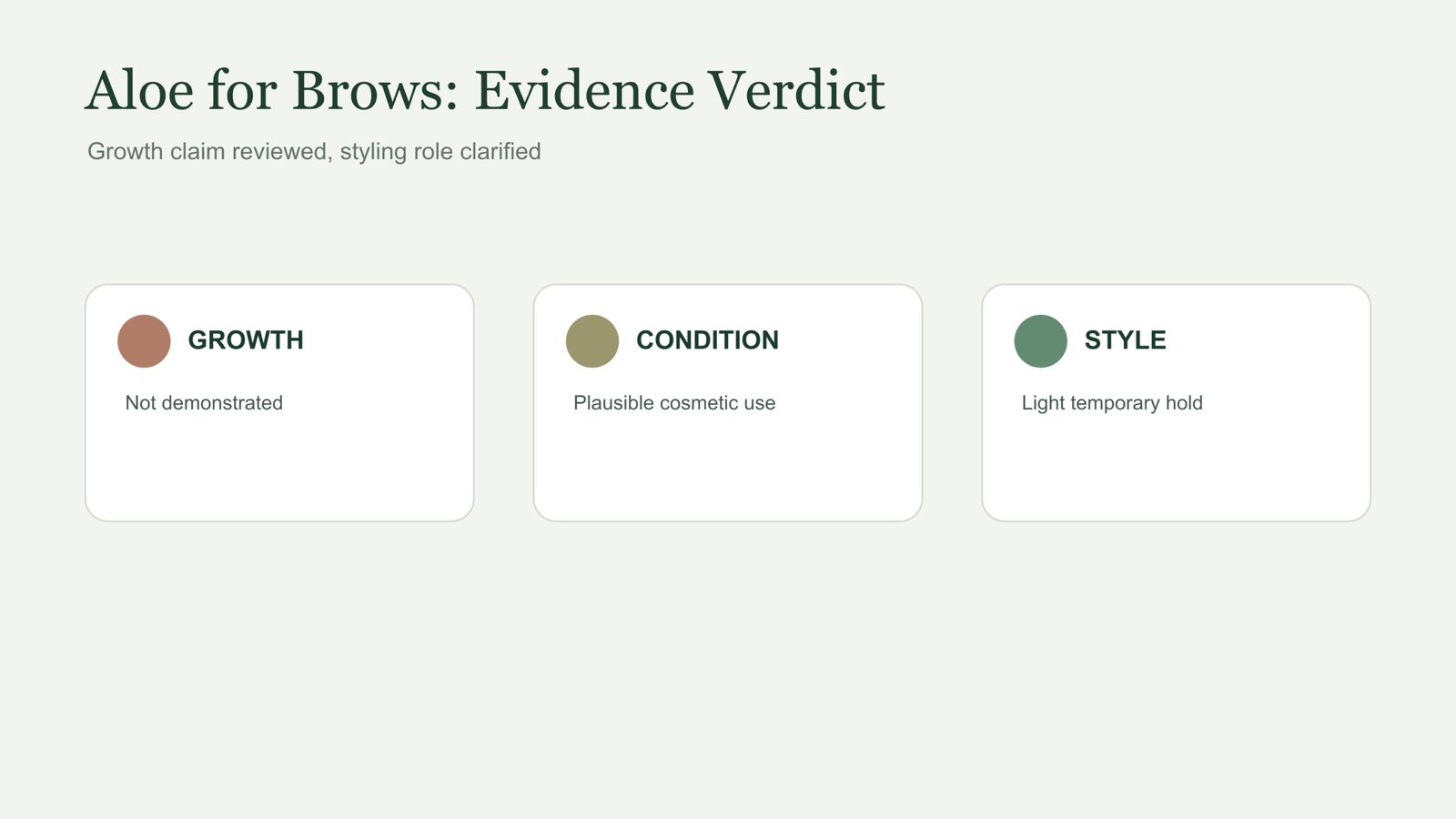
There is no direct human evidence that aloe vera grows eyebrows. Research on topical aloe concerns skin conditions and wound healing, not eyebrow follicles. A commercially preserved, fragrance-free aloe gel may condition the brow area and give light temporary hold, but that is different from increasing hair count, thickness, or growth speed.
Aloe Vera for Eyebrows Guide
Aloe Vera for Eyebrows: What It Can and Cannot Do
Aloe vera gel is the clear, water-rich material from inside the plant leaf. Commercial gels usually combine aloe leaf juice with a thickener, pH adjuster, chelator, and preservation system. Those supporting ingredients are not automatically fillers; they make a water-based formula stable and usable.
Applied to brow hair, aloe can dry into a light film. That may separate hairs, reduce a dry feel, and provide soft hold. It does not behave like PVP or acrylate-based eyebrow gel, so coarse hairs may fall back sooner. Applied beneath brows, it may feel cooling or hydrating, although individual reactions vary.
This distinction matters when evaluating aloe vera for eyebrows: styling changes appearance immediately; growth changes follicle output over weeks or months. A brow looking smoother or fuller after gel dries is not evidence that new hair grew.
Does Aloe Vera Actually Grow Eyebrows? The Science
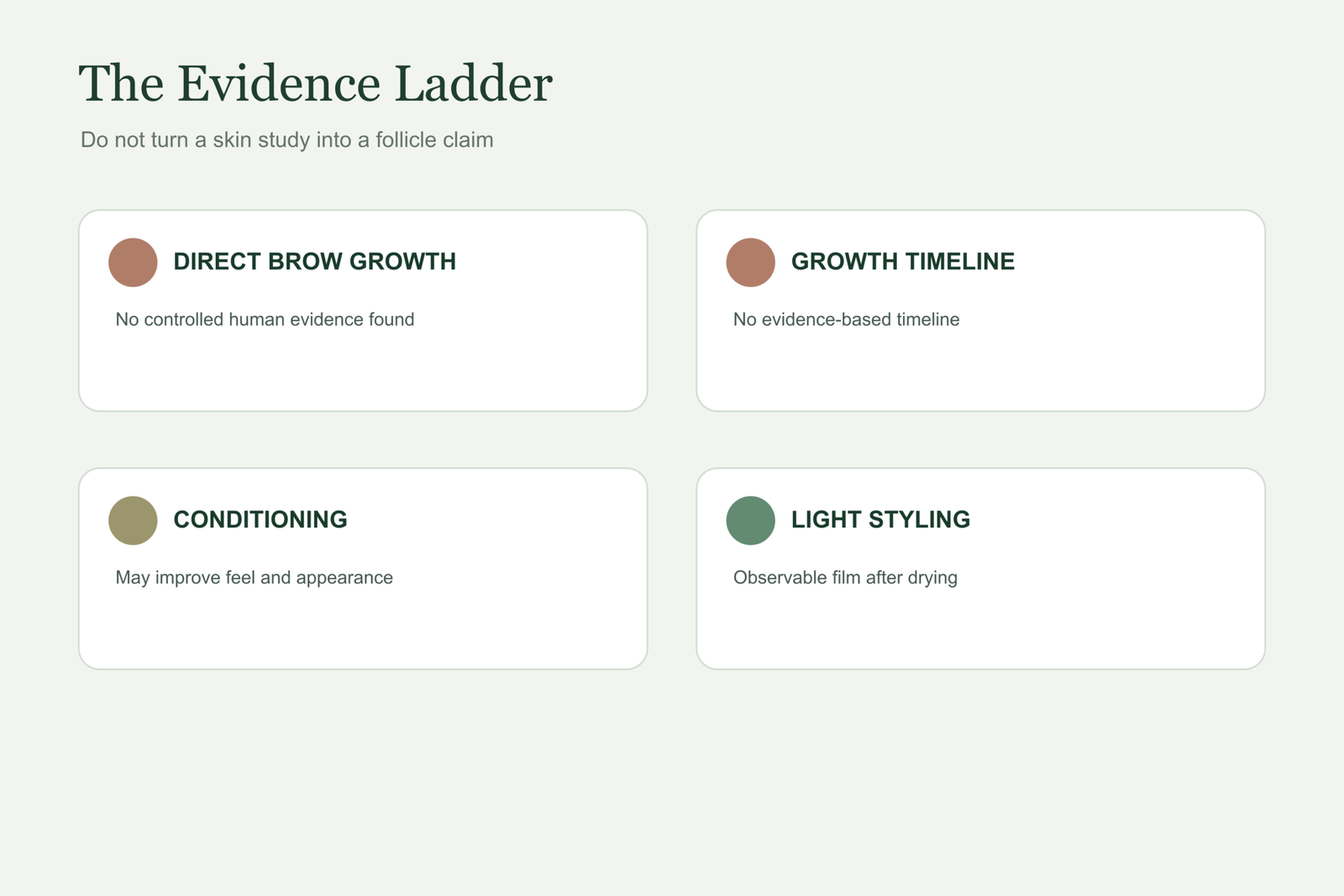
No controlled human trial has established that topical aloe vera increases eyebrow growth. Search results often jump from research on wound healing or skin comfort to a hair-growth conclusion. That is an evidence mismatch: repairing injured skin and stimulating an eyebrow follicle are different outcomes.
The National Center for Complementary and Integrative Health describes limited research for several topical skin uses, but it does not list hair or eyebrow growth as an evidence-supported benefit. A randomized trial of aloe at skin-graft donor sites examined wound healing, not hair growth. We should not convert that result into a brow claim.
| Claim | Evidence level | Honest conclusion |
|---|---|---|
| Grows new eyebrow hairs | No direct human evidence found | Unproven |
| Makes brows grow faster | No eyebrow trial found | Unproven |
| Conditions hair or skin | Cosmetic function is plausible | May improve feel, not follicle count |
| Provides light hold | Observable film after drying | Usually weaker than brow gel |
Aloe contains many compounds, but vitamins or enzymes on an ingredient list do not prove those compounds reach the follicle at an effective dose. Natural describes origin, not clinical performance. Aloe vera brow growth evidence is insufficient, not secretly positive.
What a 30-day aloe vera for eyebrows log can prove
A personal photo log can show whether aloe vera for eyebrows improves styling, comfort, or breakage in your own routine. It cannot establish that aloe caused follicle growth. Brow hairs cycle naturally, lighting changes apparent density, and stopping overplucking can produce regrowth at the same time.
If you want to track aloe vera for eyebrows, take one baseline photo and repeat it weekly in the same room, at the same distance, before applying product. Record irritation, flakes, hold duration, and hairs lost during removal. Do not count a darker wet hair or a better-combed arch as new growth.
After 30 days, keep the routine only if the cosmetic benefit is clear and the skin remains comfortable. A result of “soft hold, no growth difference” is still useful. It tells you what the product actually does without turning an ordinary styling effect into a medical claim.
Aloe Vera vs. Castor Oil for Brow Growth
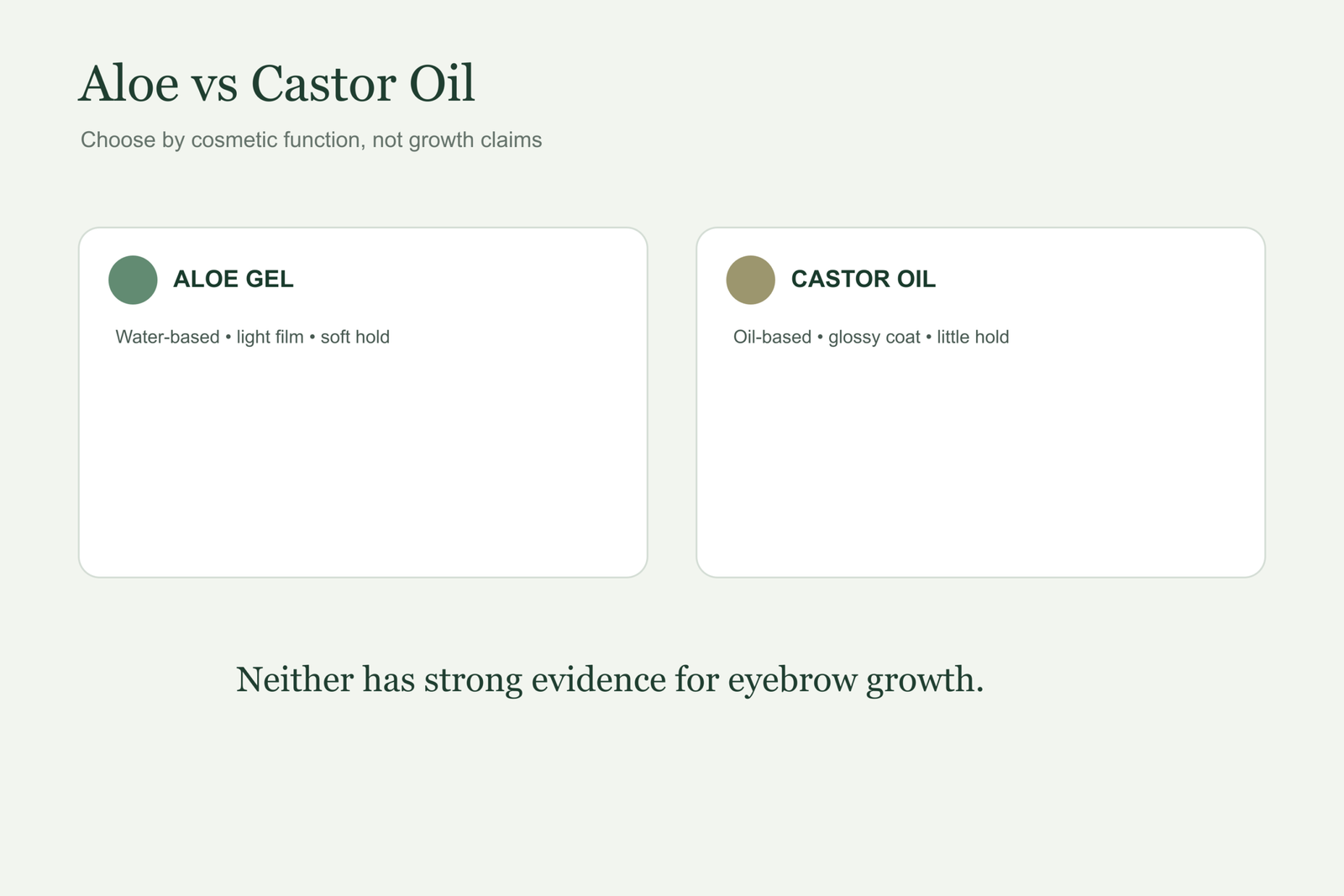
Neither aloe nor castor oil has strong evidence for eyebrow growth. A systematic review found weaker evidence that castor oil may improve hair luster, but no strong evidence that it promotes hair growth. Shine can make existing hair look healthier without changing the number of hairs.
| Feature | Aloe gel | Castor oil |
|---|---|---|
| Texture | Light, water-based | Thick, oily |
| Finish | Clear to soft film | Glossy, little setting power |
| Cosmetic use | Conditioning and light styling | Coating and luster |
| Growth evidence | No direct eyebrow evidence | No strong hair-growth evidence |
Mixing the two does not create evidence. Oil can also weaken aloe’s light hold and migrate toward the eye. Our guide to making eyebrows look thicker separates instant cosmetic volume from actual regrowth timelines.
How to Use Aloe Vera for Eyebrows
Choose a clear, fragrance-free, commercially preserved aloe gel whose label permits facial use. Avoid added essential oils, strong fragrance, green dye, or high alcohol when the brow area is reactive. Product directions still apply; 99% aloe does not mean it is intended for eye contact.
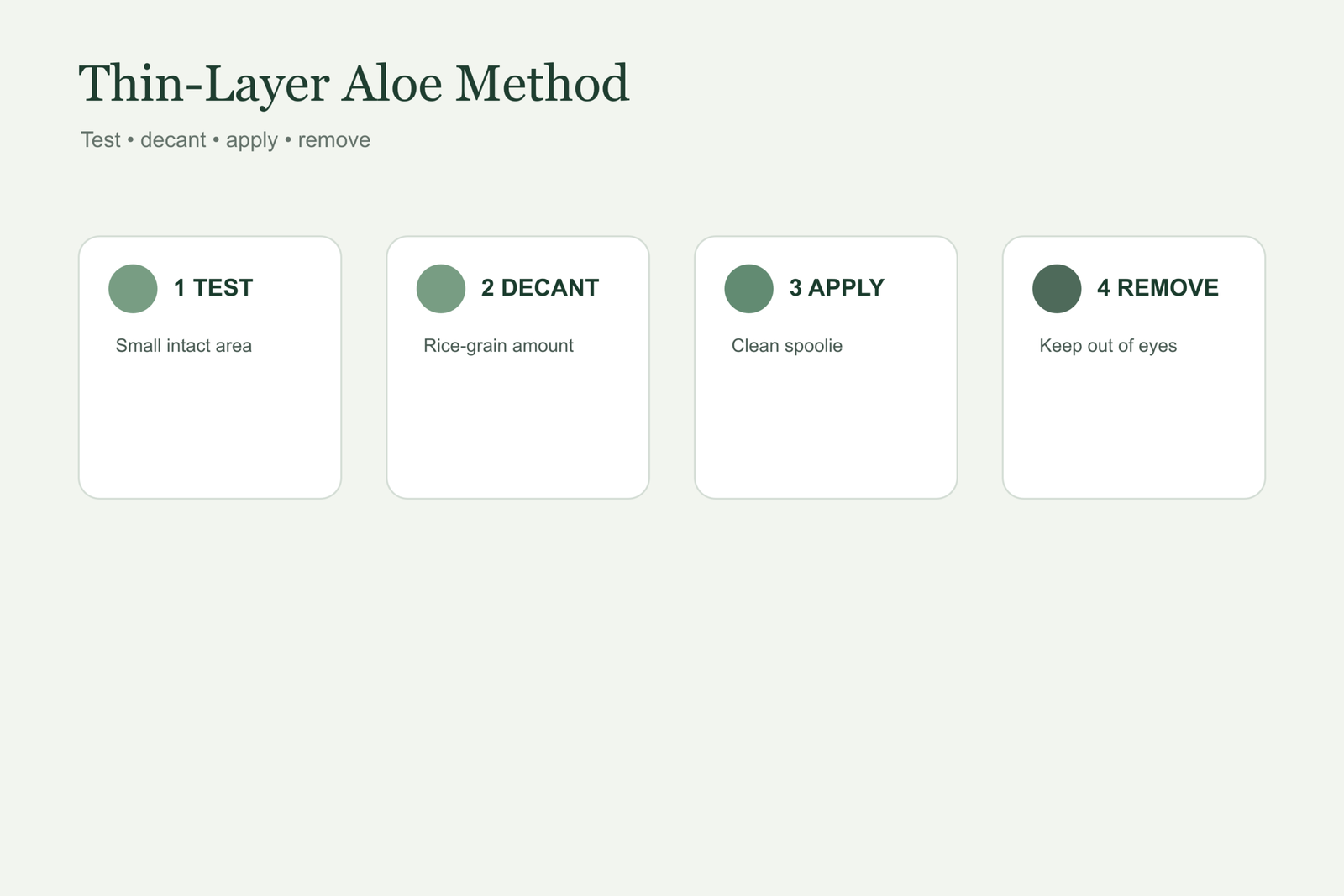
- Test a small amount on intact skin away from the eye and stop if redness, itching, or burning develops.
- Clean and dry the brow hair. Skincare residue reduces the little hold aloe provides.
- Place a rice-grain amount on a clean palette. Do not put a used spoolie into the bottle.
- Pick up a thin layer with a clean spoolie and brush upward, then outward through the tail.
- Keep the product out of the eye and off broken or inflamed skin.
- Remove with lukewarm water at the end of the day.
Topical aloe is generally tolerated, but NCCIH notes occasional burning, itching, rash, and eczema. More is not better. If aloe vera for eyebrows feels tight or flakes, use less or return to a purpose-built brow gel.
DIY Aloe Vera Brow Gel: A Safer Single-Use Method
The safer DIY version is not a stored homemade tube. It is one portion of an already preserved commercial aloe gel. Water-based mixtures can support microbial growth when ingredients, containers, or preservation are inadequate. The FDA identifies water, contaminated ingredients, poor handling, and ineffective preservation as contamination routes.
- Wash your hands and use a clean spoolie and palette.
- Dispense one rice-grain amount of commercially preserved, fragrance-free aloe gel.
- Brush a thin coat through clean brows.
- Discard the unused portion and wash the tools. Never return it to the bottle.
Do not add essential oils, fresh leaf gel, cocoa, charcoal, food powders, saliva, or water. Do not refill an old mascara tube unless every surface can be fully cleaned and dried. Refrigeration does not validate preservation or make an untested mixture eye-area safe.

Best Aloe Vera for Eyebrows Products
These are ingredient-screened examples for light styling or conditioning, not eyebrow-growth treatments. We have not claimed hands-on testing. Follow the label and avoid direct eye contact.
- Aloderma Pure Aloe Vera Gel 99%, 100 g pump: fresh organic aloe leaf juice with carbomer and a preservation-support system. The pump limits repeated finger contact; no fragrance or SD alcohol is listed.
- Seven Minerals Aloe Vera Gel 99% Organic, 2 oz travel size: aloe, seaweed extract, citric acid, ascorbic acid, and potassium sorbate. It is unscented but relatively fluid, so expect soft hold.
- Lily of the Desert 99% Aloe Vera Gelly, 4 oz: a thicker gel with a formal preservative system. Check the current label because formulas can change.
Aloe label decoder
For aloe vera for eyebrows, “aloe barbadensis leaf juice” identifies the aloe base. Carbomer, xanthan gum, or seaweed extract controls texture. Potassium sorbate, phenoxyethanol, 1,2-hexanediol, or a broader system helps protect the water-based product. Citric acid adjusts pH, while EDTA supports formula stability.
A shorter list is not automatically safer. An unpreserved bottle may look simpler while creating a larger contamination question. Compare the full current label, packaging, directions, and warning language rather than buying aloe vera for eyebrows solely from a large percentage printed on the front.
If you need firm all-day hold, use a formulated product from our best eyebrow gel guide. Aloe vera for eyebrows is better treated as a minimalist alternative for soft grooming.
When Aloe Is Not the Answer
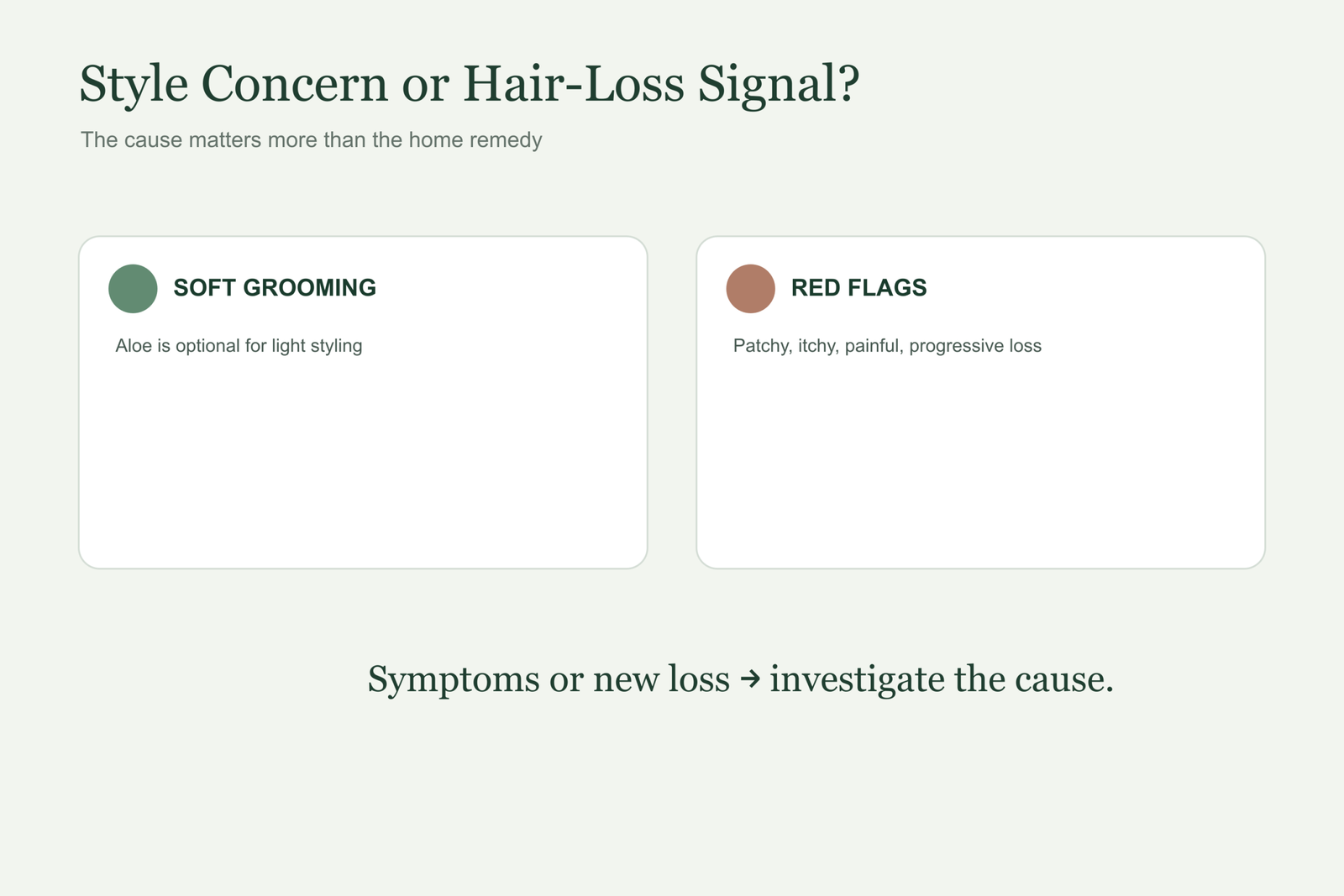
Eyebrow thinning can come from overplucking or breakage, but it can also accompany alopecia areata, thyroid disease, nutritional deficiency, infection, inflammation, or scarring conditions. The American Academy of Dermatology stresses that finding the cause determines whether and how hair can regrow.
Seek professional evaluation for sudden patches, loss on one side, smooth shiny skin, redness, scaling, pain, intense itching, eyelash loss, scalp loss, or progressive thinning. Stop aloe if it burns, swells, or causes a rash. A cosmetic gel should never delay diagnosis.
Using aloe vera for eyebrows makes sense only when the goal is cosmetic conditioning or soft control. It does not treat alopecia, thyroid-related loss, dermatitis, infection, nutrient deficiency, or a damaged follicle.
Frequently Asked Questions
Does aloe vera for eyebrows really improve growth?
No direct human evidence shows that aloe increases eyebrow growth. It may condition skin and provide light styling hold, improving appearance without creating new hair.
Can I leave aloe vera on my eyebrows overnight?
There is no proven growth advantage to overnight use. Follow the label, keep it out of the eyes, and discontinue use if irritation develops.
Is fresh aloe leaf safe for eyebrows?
A fresh leaf is not a standardized, preserved eye-area cosmetic. A commercially preserved fragrance-free gel offers clearer ingredients, directions, and shelf stability.
Is aloe vera or castor oil better for eyebrow growth?
Neither has strong eyebrow-growth evidence. Aloe is lighter and gives some styling film; castor oil coats hair and adds shine but offers little hold.
Can aloe replace eyebrow gel?
It can replace light-hold clear gel for soft brows. It is unlikely to control coarse hair as well as a purpose-built hold-polymer formula.
How long before aloe grows eyebrows?
There is no evidence-based timeline because growth has not been demonstrated. If brow loss persists, investigate the cause rather than waiting for aloe to work.
Medical note: This evidence review is educational and does not diagnose or treat eyebrow loss. Product links have not been monetized.