
Emma Colins · Beauty Product Analyst & Content Editor · Updated August 9, 2026
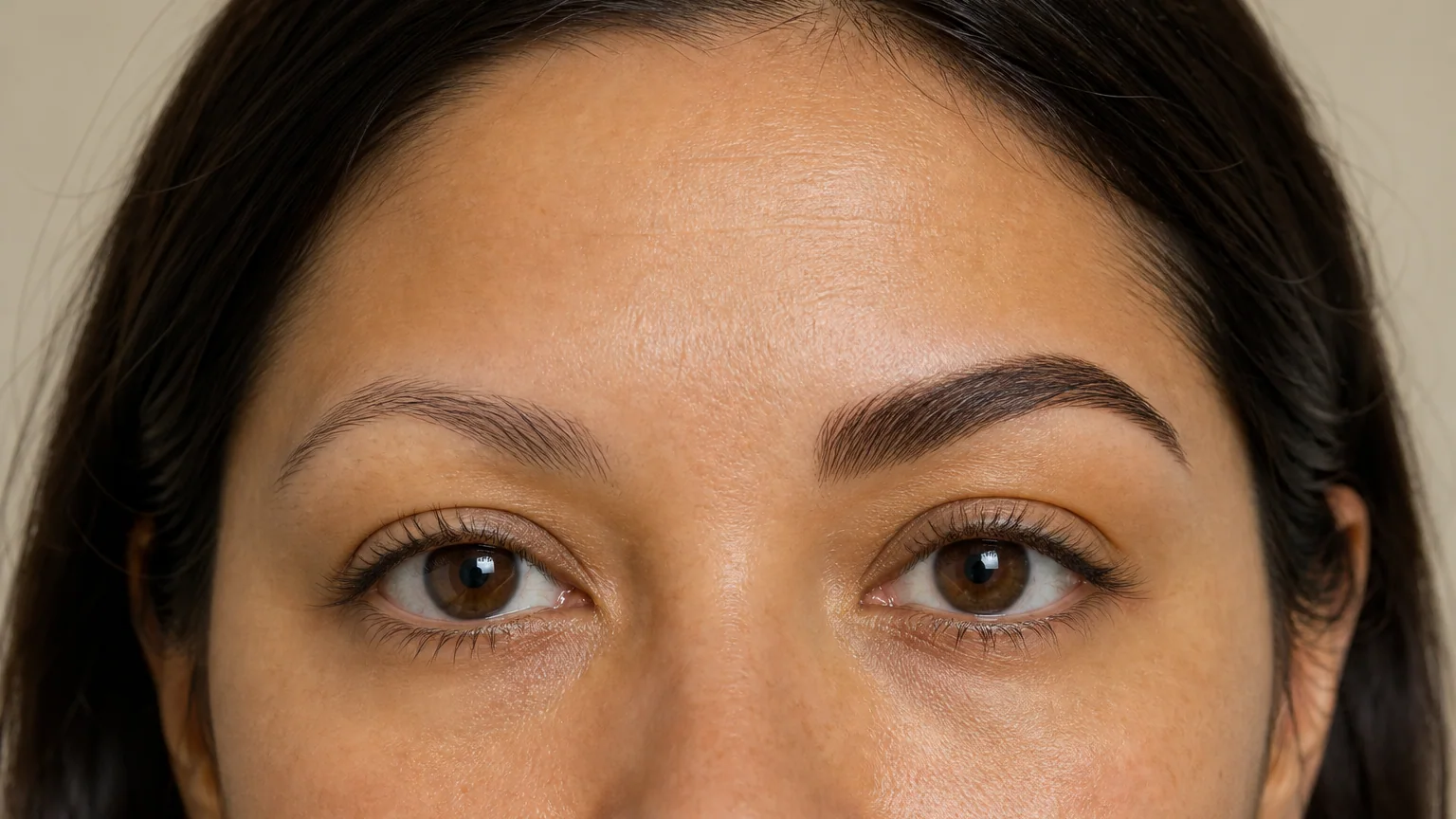
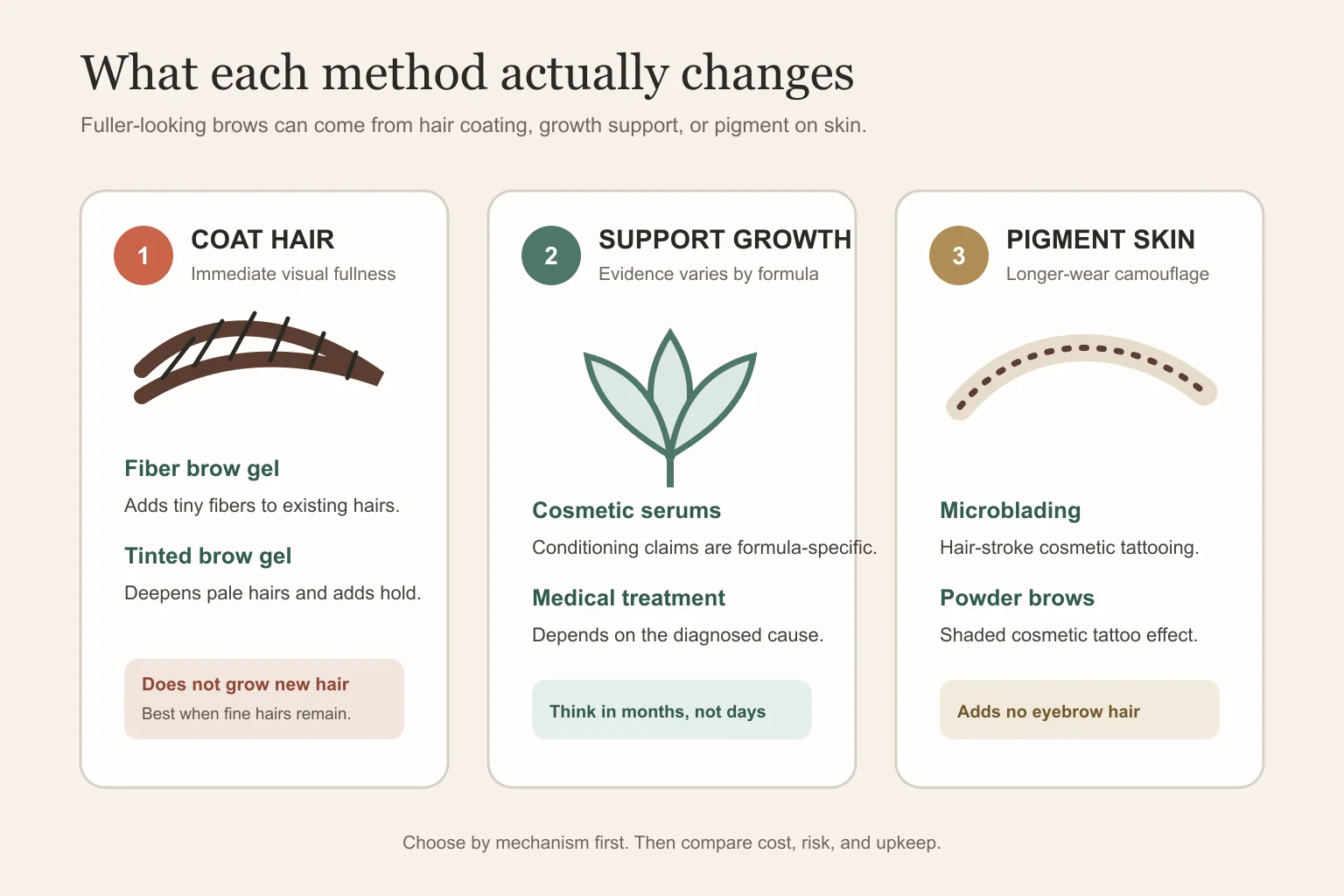
If you want to know how to make eyebrows thicker, first decide which result you mean: fuller-looking brows today, more visible hair over several months, or pigment that disguises a gap. Fiber and tinted gels coat the hairs you already have. Growth serums and medical treatment depend on the formula and the cause of thinning. Microblading and powder brows place pigment in skin; they do not grow hair.
How to make eyebrows thicker: quick answer
- For tonight: use a tinted fiber brow gel when fine hairs remain; add a pencil only where there is bare skin.
- For overplucked brows: stop removing hair, photograph a baseline, and allow about three to four months before judging regrowth.
- For true thinning: investigate the cause before buying supplements or a medicated product.
- For long-wear camouflage: understand that microblading and powder brows are cosmetic tattoos with real aftercare and removal considerations.
How to Make Eyebrows Thicker: Contents
| Method | Creates hair? | First visible effect | Best fit |
|---|---|---|---|
| Fiber gel | No | Immediate | Fine hairs with visible gaps |
| Tinted gel | No | Immediate | Pale, gray, or low-contrast hairs |
| Castor oil | Not proven | No reliable timeline | Conditioning, if tolerated |
| Serum or treatment | Formula/cause dependent | Usually months | Consistent users with a clear goal |
| Microblading | No | After healing | Hair-stroke camouflage |
| Powder brow | No | After healing | Soft shaded camouflage |
| Nutrition | Only if a deficiency contributes | Months | Clinician-confirmed deficiency |
Why Eyebrows Thin Over Time
A useful plan for how to make eyebrows thicker starts with the pattern of loss. Some people have naturally fine brows and a low number of follicles. Others have hairs that look sparse because they are pale, short, or growing in different directions. Repeated tweezing can also keep removing hairs before they complete a normal cycle; long-term trauma may eventually damage follicles.
Age, skin inflammation, alopecia areata, thyroid disease, nutritional deficiency, medication, stress, and other conditions can contribute to eyebrow loss. The clinical review of eyebrow and eyelash alopecia describes a broad range of possible causes and explains that eyebrow hairs have a much shorter growth phase than scalp hair. This is why a one-week experiment cannot tell you whether a growth method worked.
Look at where the change began. A uniformly fine brow that has always looked the same is different from a sudden round patch, scaling around the brow bone, rapid loss at the outer edge, or a brow that keeps becoming thinner. The American Academy of Dermatology notes that eyebrow loss can be an early sign of some hair-loss disorders and recommends early assessment because certain forms can become permanent.
How to Make Eyebrows Thicker with Fiber Brow Gel
For the fastest visible answer to how to make eyebrows thicker, use a fiber brow gel. The formula deposits color and tiny fibers around the hairs already present, while a hold polymer keeps them separated and lifted. That increases apparent diameter and reduces the contrast between hair and skin. The change disappears with makeup removal.
Fiber gel works best when the brow has fine hairs throughout but lacks visual density. It is less successful on a completely bare tail because fibers need something to grip. In that case, sketch only the missing area with a fine pencil or pen, then comb gel through the full brow. Our sparse-brow gel comparison ranks products by fiber effect, brush control, shade, and clumping risk.
Wipe one side of the spoolie on the tube neck, back-brush the arch and tail against growth, then smooth the hairs upward and outward. This coats more of each shaft without leaving a heavy block at the front. If you need a beginner routine, follow our guide to using brow gel with a spoolie.
Method 2: Tinted Brow Gel for Volume
How to make eyebrows thicker with tinted gel: reveal pale hairs and hold them in a wider shape. This is often the most natural option when the hairs are blond, gray, red, or simply lower contrast than the skin. Unlike a fiber formula, a plain tinted gel does not need visible particles to create definition.
Choose a shade close to the depth of the brow hair rather than automatically matching dark roots. Start at the tail, where extra depth is useful, and use the remaining product at the inner brow. If the front turns into a square, pass a clean spoolie through it before the formula sets. For more shape options, compare the natural, feathered, laminated, polished, and editorial finishes in our advanced brow-gel looks.
Tinted gel still cannot cover a large area of bare skin. For a reversible color test that lasts longer than one day, see our eyebrow tinting guide, but follow eye-area safety instructions and never substitute scalp hair dye.
Method 3: Castor Oil Treatment
How to make eyebrows thicker with castor oil is an unproven promise. Castor oil appears in almost every natural-brow list, but its reputation is stronger than the evidence. There are no good clinical trials showing that topical castor oil creates new eyebrow hair. Its practical role is narrower: an oil may reduce friction and make dry hairs feel softer or look shinier, which can reduce breakage in a rough grooming routine.
If you choose to try it, keep expectations modest. Use a tiny amount on clean brow hair, keep it out of the eyes, and stop if the skin becomes red, itchy, swollen, or bumpy. Do not apply it over dermatitis, broken skin, or a recent cosmetic procedure. Patch-test guidance for the eye area is covered in our sensitive-skin brow guide.
The honest verdict: castor oil is not the fastest way to thicken thin eyebrows and has no dependable growth timeline. It may be a conditioning step, but it should not delay assessment of sudden or progressive loss.
How to Make Eyebrows Thicker with Brow Growth Serums
A brow growth serum can mean very different things. Cosmetic formulas often contain peptides, panthenol, glycerin, botanical extracts, or conditioning agents. These may improve flexibility and reduce breakage, but the claim that they grow new hair depends on the exact formula and its evidence. Read the complete ingredient list with our brow ingredient guide instead of relying on the word “growth” on the front label.
Prescription or clinician-directed options are a separate category. Randomized studies have reported increased eyebrow density or diameter with bimatoprost formulations, including a vehicle-controlled eyebrow hypotrichosis trial. That does not make an eye medication a DIY brow serum. Eyebrow use may be off-label, side effects and contraindications matter, and the right treatment depends on the cause. Ask a dermatologist rather than moving a product from the lash line or medicine cabinet onto your brows.
For anyone researching how to make eyebrows thicker with a serum, compare three things: the exact active ingredients, evidence for the finished formula rather than one ingredient in isolation, and the point at which you will stop spending if baseline photos show no improvement. Apply consistently only as directed and keep the product out of the eye.
How to Make Eyebrows Thicker with Microblading
Microblading creates fine, hair-like pigment strokes in the skin. It can make an overplucked tail or a persistent gap look fuller after healing, but it does not make eyebrows thicker biologically. The result is closer to long-wear camouflage than a growth treatment.
Treat microblading as cosmetic tattooing, not a casual salon add-on. The U.S. Food and Drug Administration explains that permanent makeup inks fall under tattoo-ink oversight and notes reported problems including infection and adverse reactions. A medical review of microblading complications also describes pigment changes, allergic reactions, granulomas, scarring, and unsatisfactory shape. Removal can be difficult, expensive, and incomplete.
Before booking, check local licensing rules, healed work rather than fresh social-media photos, sterile single-use tools, pigment documentation, aftercare, touch-up policy, and what happens if you dislike the shape. Map the brow first and wear that penciled shape for several days. Our eyebrow shape and mapping guide can help you test the arch before making a longer-term decision.
Method 6: Microshading and Powder Brows
How to make eyebrows thicker with powder brows: deposit pigment in a soft, shaded pattern rather than drawing separate hair strokes. This can suit someone who prefers a filled-in makeup effect, but the change exists only at the level of appearance. Powder brows add no hairs and do not repair a damaged follicle.
The same permanent-makeup cautions apply: infection control, allergy, color shift, asymmetry, scarring, healing, touch-ups, and difficult removal. “Semi-permanent” should not be interpreted as guaranteed to disappear cleanly on a schedule. Skin type, pigment, technique, sun exposure, and repeated touch-ups all affect how it ages.
Choose microblading when a skilled professional can create believable strokes within existing hair; choose a powder effect when you knowingly want soft makeup-like shading. Delay both if you have active irritation, unexplained eyebrow loss, or uncertainty about shape. A temporary pencil-and-gel test gives you more useful information than an edited before-and-after image.
Method 7: Diet and Supplements for Brow Growth
How to make eyebrows thicker through nutrition depends on whether a deficiency is actually contributing. A balanced diet supports normal hair biology, but more vitamins do not automatically make healthy follicles produce more eyebrow hair. If iron, zinc, vitamin D, protein, thyroid function, or another issue contributes to loss, correcting the underlying problem may help. The right test and treatment depend on symptoms and medical history.
Biotin is the classic example of marketing outrunning evidence. The National Institutes of Health says biotin deficiency can cause hair loss but is rare, and there is little scientific evidence to support routine high-dose supplements for hair, skin, or nails. Biotin can also interfere with laboratory results, including some hormone tests. Tell your clinician about supplements before blood work.
If your goal is how to make eyebrows thicker naturally, prioritize adequate protein, varied whole foods, gentle grooming, sleep, and evaluation of persistent loss over a stack of high-dose pills. Do not self-treat a suspected deficiency based on brow appearance alone. A clinician may use history, examination, and blood tests to identify whether nutrition, hormones, inflammation, or another cause is relevant.
Realistic Timeline: When to Expect Results
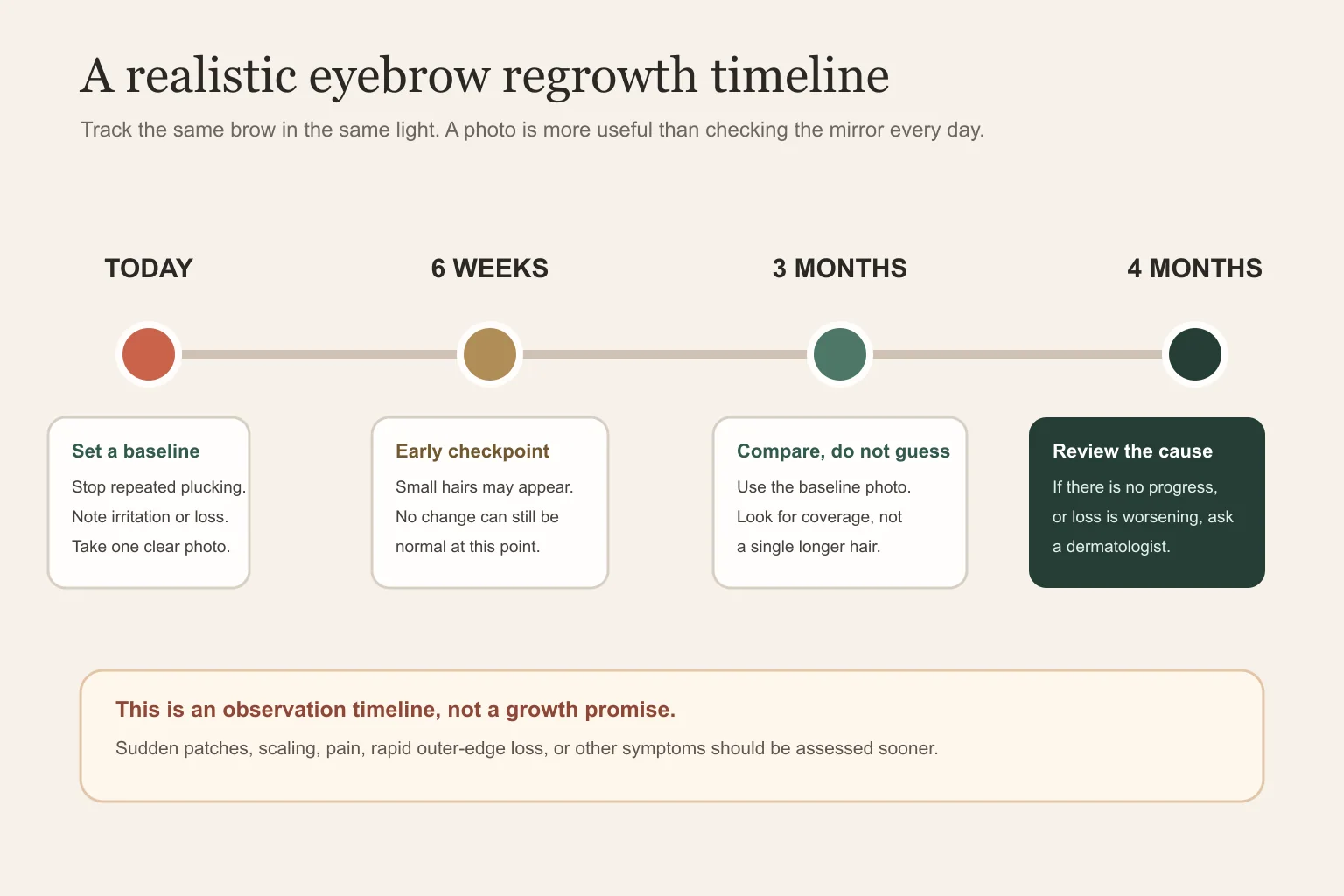
The most reliable way to judge how to make eyebrows thicker is to separate immediate styling from slow biological change. Gel changes the look in minutes. Microblading changes the look after healing. Regrowth takes multiple hair-cycle stages, so daily mirror checks create noise rather than evidence.
- Today: stop repeated plucking, record the pattern, and take a clear photo without brow makeup.
- At six weeks: look for early short hairs, but do not declare failure if the area still looks similar.
- At three months: compare photographs in the same light and assess coverage, not one unusually long hair.
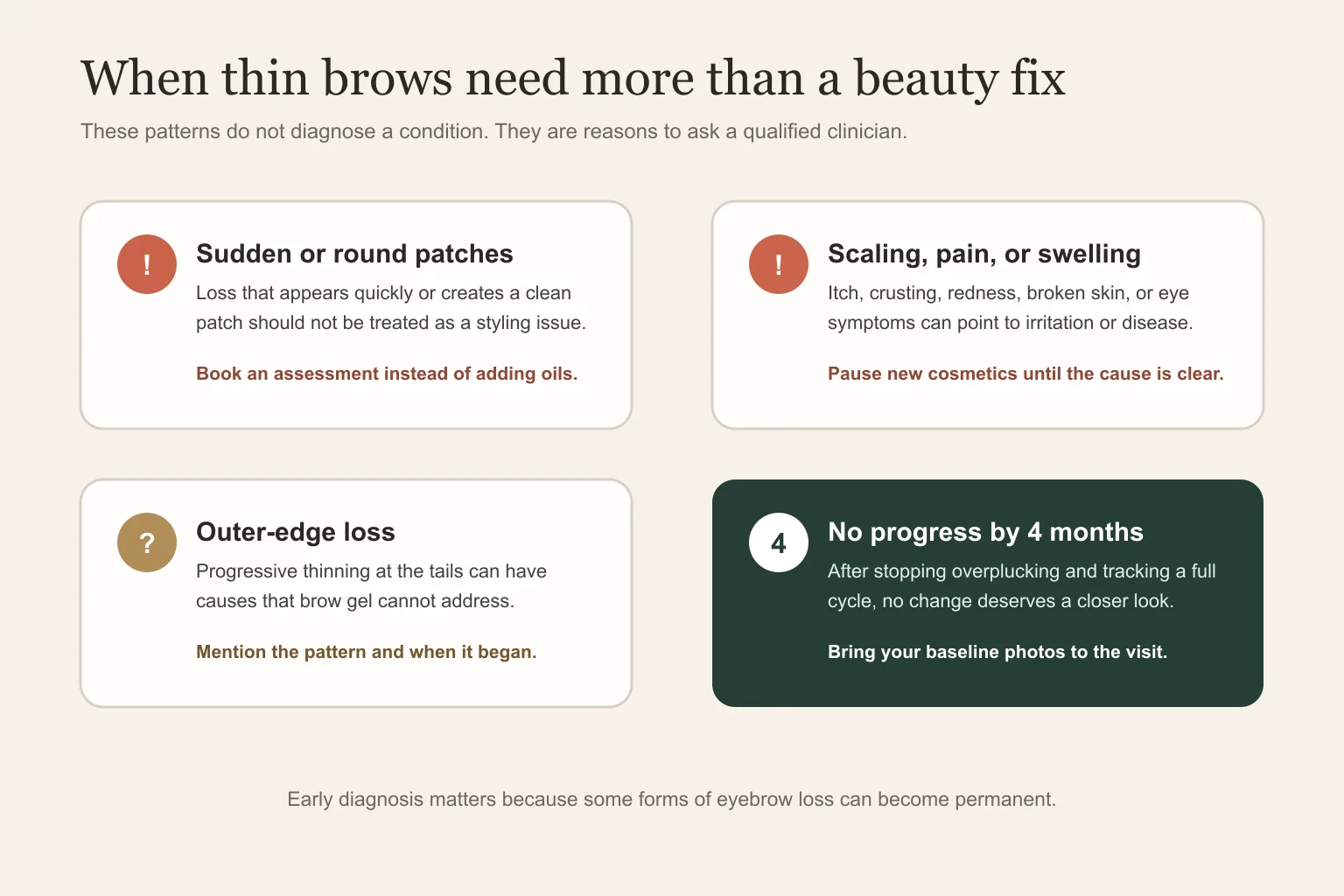
- At four months: if overplucked brows show no progress, or loss is worsening, ask a dermatologist to review the cause.
Cleveland Clinic dermatology guidance recommends giving overplucked brows at least two to three months and notes that the eyebrow cycle is roughly three to four months. That is a more useful expectation than a product promise measured in days.
See a dermatologist sooner for sudden patches, rapid outer-edge loss, scaling, pain, swelling, significant itch, loss elsewhere on the body, or other new symptoms. This guide can compare cosmetic methods; it cannot diagnose eyebrow loss.
Frequently Asked Questions
How to Make Eyebrows Thicker Fast Without Looking Drawn On?
A tinted fiber brow gel is fastest when fine hairs remain. It adds color, visible diameter, and hold immediately. Use a fine pencil only on bare skin, then comb gel through the brow so the finish stays soft.
How to Make Eyebrows Thicker Naturally Without Supplements?
Stop overplucking, groom gently, eat an adequate varied diet, and allow a full growth cycle. Castor oil has no strong evidence for new growth, and supplements help only when a relevant deficiency exists. Persistent or unusual loss needs professional assessment.
How to Make Eyebrows Thicker After Overplucking, and How Long Does It Take?
Allow at least two to three months before making an early judgment and use about four months as a review checkpoint. Repeated long-term trauma can damage follicles, so some areas may not fully return.
Does castor oil make eyebrows grow?
There is no good clinical evidence that castor oil grows new eyebrow hair. It may condition dry hair or reduce friction, but it should not replace diagnosis or an evidence-based treatment plan.
Is brow serum better than brow gel?
They solve different problems. Brow gel gives immediate cosmetic fullness and hold. A serum is a slow, formula-specific treatment or conditioning step. Use gel for today’s appearance; judge a serum against evidence and baseline photos over months.
Do microblading or powder brows grow eyebrow hair?
No. Both add pigment to skin to imitate density. They are forms of permanent makeup and require careful provider selection, informed consent, healing, and acceptance that removal may be difficult.
When should thin eyebrows be checked by a doctor?
Seek assessment for sudden or patchy loss, irritation or scaling, rapid thinning at the outer edge, other symptoms, or no visible progress after a full regrowth window. Earlier diagnosis can matter when the underlying condition can cause permanent loss.
The practical conclusion: the best answer to how to make eyebrows thicker depends on the mechanism. Use fiber or tinted gel for immediate, reversible fullness. Give overplucked brows a measured regrowth window. Treat unexplained loss as a cause to investigate, not a reason to buy more products. Choose cosmetic tattooing only when you understand that it adds pigment, not hair.
Editorial note: Emma Colins reviewed dermatology guidance, cosmetic safety information, clinical literature, and ingredient evidence for this article. We did not conduct a clinical growth trial, and this guide is not medical diagnosis or treatment. See our methodology and editorial trust standards.