
Beauty Product Analyst & Content Editor · About the publication · Updated August 8, 2026
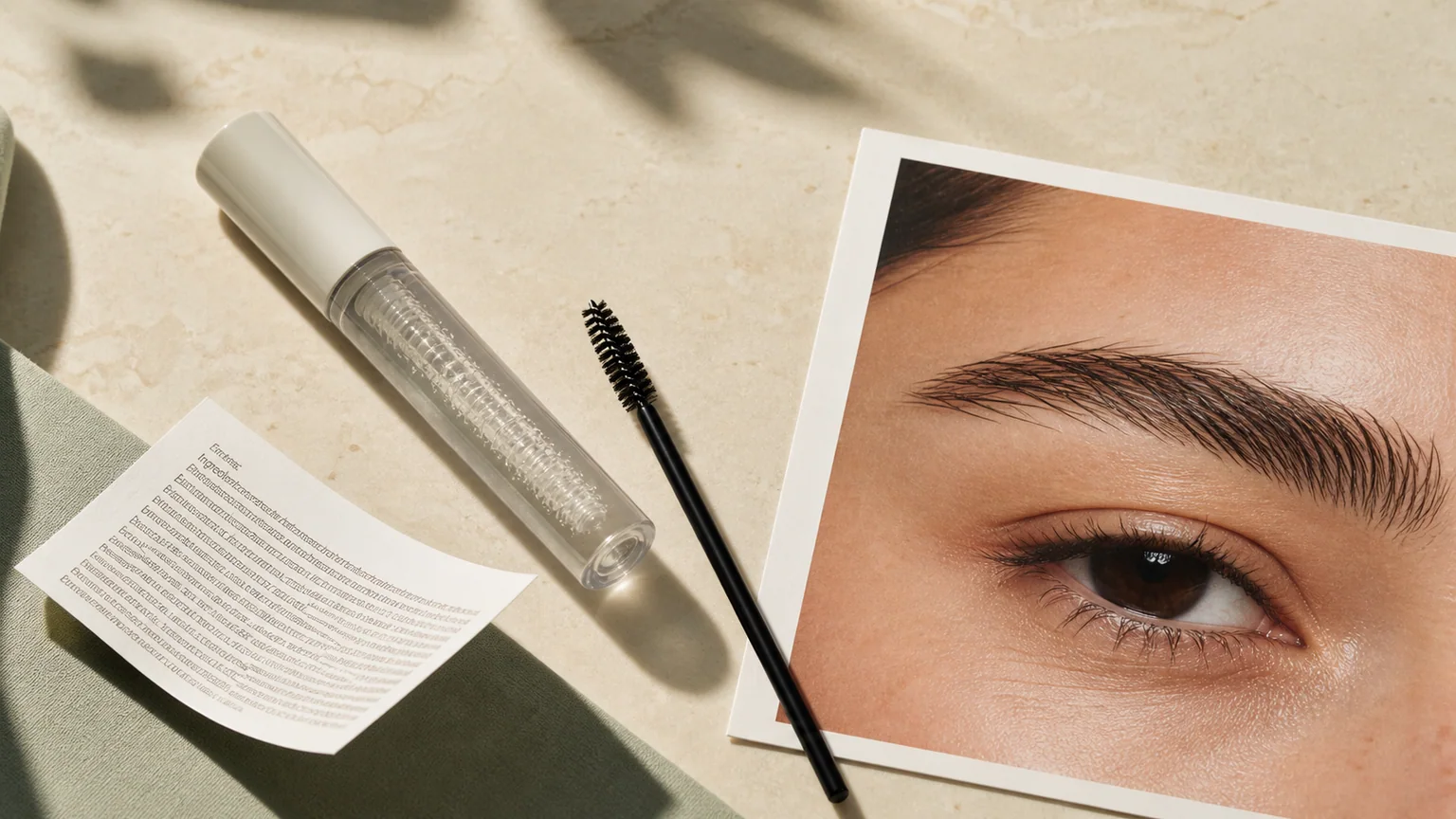
Bad ingredients in brow gel are not one universal blacklist. The most important red flags are an incomplete label, a formula used against its directions, and an ingredient that has already caused you a reaction. Fragrance, isothiazolinones, formaldehyde-releasing preservatives, and some volatile alcohols deserve extra attention if your brow area is reactive. Parabens, silicones, PVP, and preservatives are not automatically harmful.
That distinction matters. A long list of scary names can make a page look authoritative while leaving you worse at choosing a product. This guide gives you a faster method: stop at product-level red flags, check your personal triggers, then judge the finished formula. If you want the function of each common INCI term first, open our brow gel ingredients guide.
Unique insight: our three-bucket label check ranks decisions by practical risk instead of counting how many unfamiliar names appear on the package.
Key Takeaways
- The clearest bad ingredients in brow gel warning is often a product-level problem: no complete list, a broken seal, or changed smell and texture.
- Fragrance and preservatives are among the common cosmetic allergen groups, but risk depends on the ingredient, exposure, and person.
- Methylisothiazolinone is a notable leave-on sensitization concern and is prohibited in EU leave-on cosmetics.
- Volatile alcohols and fatty alcohols behave differently. The word “alcohol” alone is not enough to judge a formula.
- “Clean,” “natural,” and “hypoallergenic” do not guarantee that a brow gel will not cause a reaction.
On This Page
Why Ingredients Matter Near the Eye Area
Brow gel belongs on brow hair and the skin immediately beneath it, not inside the eye or along the waterline. That small distance still matters. A wet spoolie can touch irritated skin, migrate with sweat, or deposit more product when you make several passes. The FDA eye cosmetic safety guidance recommends checking the ingredient declaration, avoiding eye cosmetics when the surrounding skin is inflamed, and stopping products that cause irritation.
An ingredient list can help you avoid known allergens and compare formula types. It cannot predict every reaction. Concentration, purity, preservation, packaging, skin condition, and the complete formula all influence tolerance. Even a useful ingredient can become a problem for one sensitized user. Our guide to eyebrow gel for sensitive skin explains patch testing and application choices in more detail.
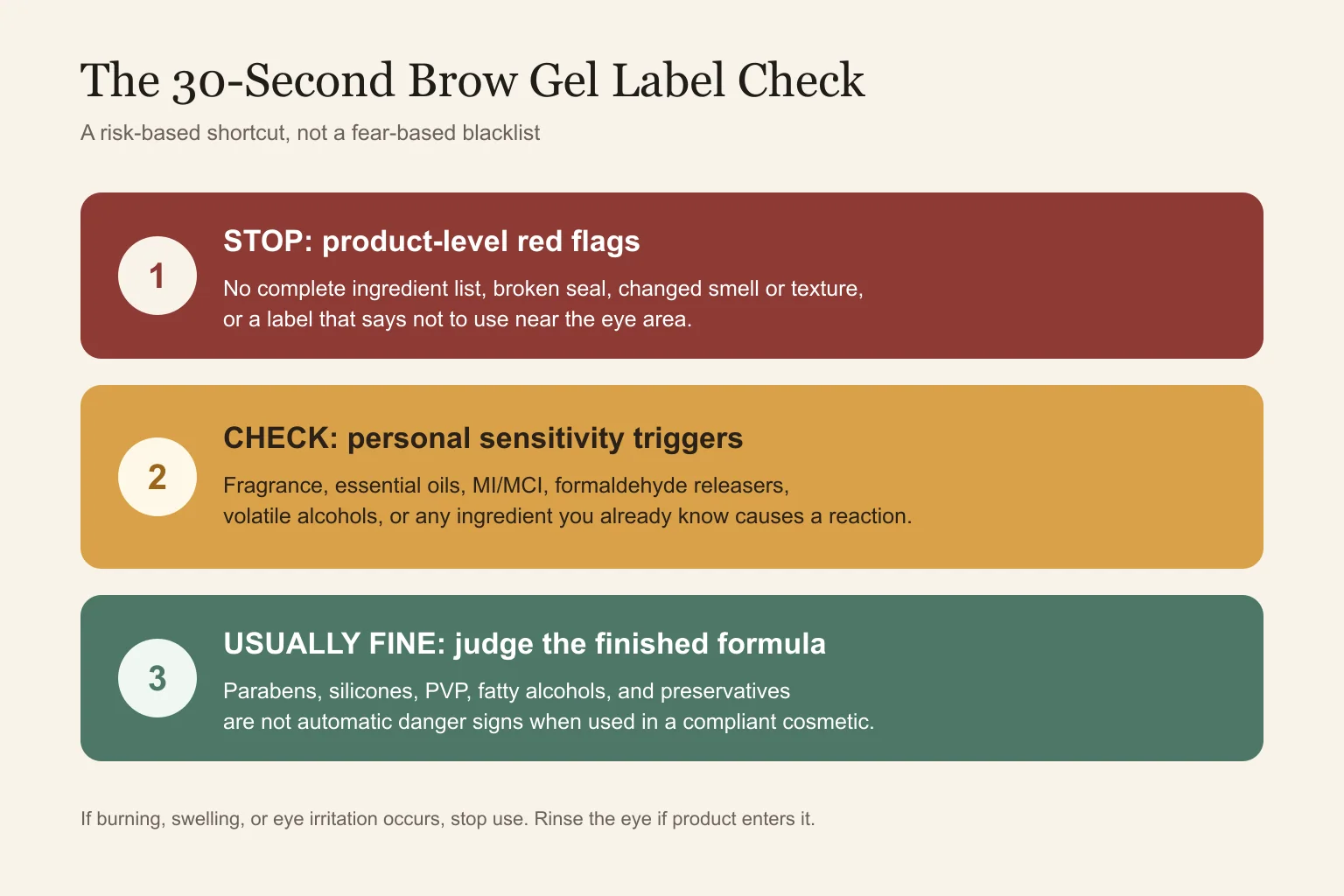
Bad Ingredients in Brow Gel: 7 Real Risks and Label Checks
1. Fragrance, parfum, and aromatic extracts
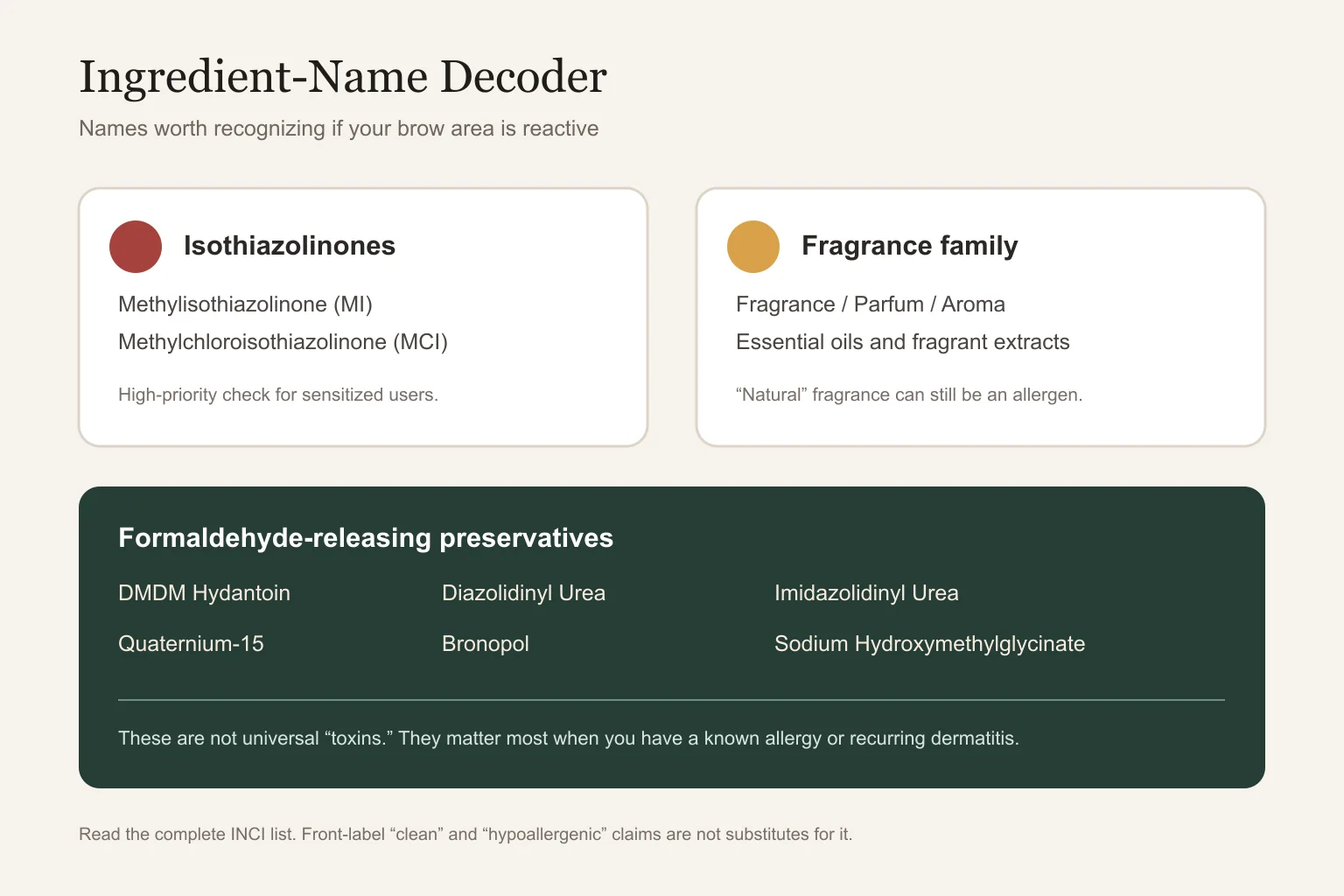
Fragrance is a mixture used to create or mask scent. It is not a problem for every user, but it is a common cosmetic allergen category. The FDA fragrance guidance notes that some fragrance ingredients can cause allergies or sensitivities. A formula may list “fragrance,” “parfum,” or “aroma” rather than every component of a fragrance blend.
Bad ingredients in brow gel check: if fragrance has triggered eyelid or facial dermatitis before, choose a truly fragrance-free product and still read the full INCI list. “Unscented” can mean odor has been masked. Essential oils and fragrant botanical extracts can also contain sensitizing fragrance compounds.
2. Methylisothiazolinone and methylchloroisothiazolinone
Methylisothiazolinone is a preservative, often shortened to MI. Methylchloroisothiazolinone, or MCI, belongs to the same preservative family. Both are associated with contact allergy. This is one of the clearer checks among bad ingredients in brow gel for reactive users. The European Union prohibited MI in leave-on cosmetic products after its scientific committee concluded that a safe leave-on concentration had not been adequately demonstrated for contact allergy risk. The rule is documented in EU Regulation 2016/1198.
Label check: skip MI or MCI in a leave-on brow product if you are buying across markets or have recurring eyelid dermatitis. A product sold legally in one country may follow different restrictions from a product sold elsewhere.
3. Formaldehyde-releasing preservatives
Some preservation systems release small amounts of formaldehyde over time. Names worth recognizing include DMDM hydantoin, diazolidinyl urea, imidazolidinyl urea, quaternium-15, bronopol, and sodium hydroxymethylglycinate. The FDA cosmetic allergen overview lists these among preservative ingredients associated with allergic contact dermatitis.
Label check: these names are most relevant when you have a diagnosed formaldehyde allergy or a repeated reaction pattern. Their presence is not proof that a compliant product is “toxic” to everyone.
4. Volatile alcohols high in the list
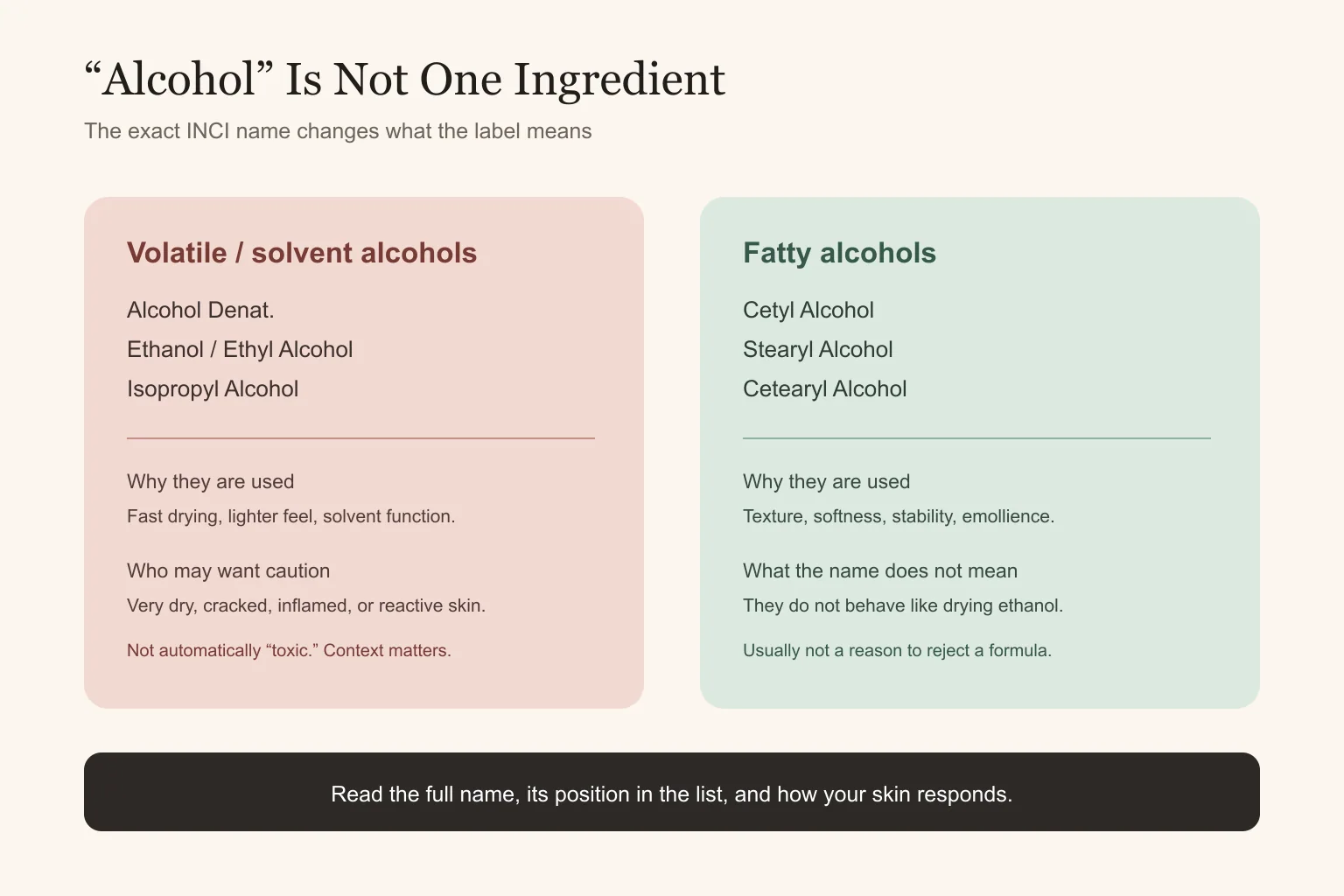
Alcohol denat., ethanol, ethyl alcohol, and isopropyl alcohol can help a gel dry quickly and feel light. They can also sting compromised skin or feel drying to some users, especially when they appear near the beginning of the list. That is a comfort and tolerance question, not proof of systemic harm.
Do not confuse them with cetyl alcohol, stearyl alcohol, or cetearyl alcohol. Those are fatty alcohols commonly used for texture and emollience. The FDA explanation of “alcohol-free” cosmetic claims also distinguishes ethyl alcohol from fatty alcohols.
In the US, ingredients present above 1% are generally listed in descending order. Ingredients at 1% or less may appear in any order after that point, so placement cannot reveal an exact concentration. See the FDA labeling summary.
Label check: read the full alcohol name. Consider a different formula if a volatile alcohol appears high on the list and your brow skin is dry, cracked, or reactive.
5. Essential oils and “natural fragrance”
Plant origin does not guarantee gentleness. Citrus, mint, lavender, tea tree, and other aromatic oils can add scent while also introducing fragrance allergens. The FDA’s consumer cosmetic safety guidance is direct: source does not determine safety. A synthetic formula can be well tolerated, and a natural formula can cause a reaction.
Label check: if your goal is the lowest-fragrance routine, look for “fragrance-free” and confirm that aromatic oils are absent. Patch testing still matters because any ingredient can become a personal trigger.
6. Rosin or another allergen identified by patch testing
Film-formers are what let brow gel set hair in place. PVP, VP/VA copolymer, and acrylates copolymers are useful, not inherently bad. Rosin, also called colophony, is one cosmetic allergen that may appear in adhesive-style products. More importantly, your own patch-test result can identify a specific ingredient or related family that generic lists will miss.
Label check: do not remove all hold polymers from your routine based on internet lists. Ask a dermatologist for the specific names you should avoid. DermNet’s cosmetic contact-reaction overview lists rosin among possible cosmetic allergens and explains patch testing. For everyone else, polymer type mainly helps predict hold and finish.
7. Missing labels, unapproved use, and changed products
The strongest universal red flags are often about the product rather than one fashionable ingredient. Avoid a brow gel with no complete ingredient declaration, unclear seller details, a broken seal, or instructions that exclude eye-area use. Stop using a tube that changes odor, color, or texture. Do not add water or saliva to revive a drying formula, and do not share the spoolie.
These checks reduce contamination and misuse risks that “clean beauty” marketing does not solve. Good storage and application matter too. Our beginner guide explains how to use eyebrow gel without repeatedly touching skin or overloading the brush.
Label check: if the label is incomplete or the product has changed, do not try to rescue it. Replace it.
What an Ingredient List Cannot Prove
An ingredient list is a screening tool, not a laboratory report. It usually does not show exact concentrations below the labeling threshold, raw-material purity, preservative challenge-test results, packaging compatibility, or how the formula behaves after months of opening and closing. It also cannot tell you whether a gel flakes, feels crunchy, or survives oily skin.
This is why two products with similar first ingredients can perform differently. The order, grades, concentrations, pH, polymer blend, and manufacturing controls all matter. A list of bad ingredients in brow gel should help you recognize a personal risk, not pretend to replace evaluation of the finished product.
Parabens in Brow Gel: A Red Flag or a Preservative?
Parabens are preservatives used to protect cosmetics from bacteria and mold. They frequently appear on lists of harmful brow gel chemicals to avoid, but that framing leaves out the safety assessment and the role of preservation. The FDA’s current parabens information says it does not have information showing that parabens, as used in cosmetics, affect human health.
That does not mean every person tolerates every preservative. It means “paraben-free” alone does not establish that a brow gel is safer. A water-based gel needs an effective preservation system, and replacement preservatives can have their own allergy profiles. When evaluating bad ingredients in brow gel, personal reaction history and product quality are more informative than a single free-from badge.
Silicones and Pore-Clogging Concerns
Dimethicone is a silicone used to improve slip, smoothness, and film feel. It is often described online as automatically pore-clogging, but that is too broad. The peer-reviewed Cosmetic Ingredient Review final report concluded that the reviewed methicone ingredients, including dimethicone, were safe as used in cosmetic formulations.
You can still dislike the feel or notice that one finished formula contributes to bumps. That is a reason to stop that product, not evidence that every silicone is a bad ingredient. Skin response belongs to the complete formula. If oil breakdown is your main problem, our guide to making brow gel last on oily skin is more useful than removing silicones by default.
Bad Ingredients in Brow Gel: Quick Reference List
| Label clue | Who should pay attention | Best action |
|---|---|---|
| No full INCI or damaged product | Everyone | Do not buy or stop use. |
| Fragrance, parfum, aroma | Fragrance-sensitive users | Choose fragrance-free and verify the list. |
| MI or MCI | Reactive skin or dermatitis history | Avoid in leave-on brow products. |
| Formaldehyde releasers | Known formaldehyde allergy | Match exact names to patch-test advice. |
| Alcohol denat. high in list | Dry, cracked, or reactive skin | Consider a lower-alcohol alternative. |
| Parabens, silicones, PVP | No universal avoidance group | Judge the finished formula and your response. |
How to Find a Cleaner, Safer Brow Gel Without Falling for Marketing
- Confirm the complete INCI list. If the retailer page is incomplete, check the package or manufacturer website before buying.
- Start with your history. One ingredient that has caused you dermatitis matters more than ten ingredients a generic blacklist dislikes.
- Separate function from fear. Preservatives protect water-based formulas. Polymers create hold. Silicones change slip. Their names alone do not prove harm.
- Ignore unsupported absolutes. “Non-toxic,” “clean,” “natural,” and “hypoallergenic” are not guarantees. The FDA states there is no federal standard or definition governing the term hypoallergenic.
- Use the product as directed. Wipe excess from the spoolie, avoid broken skin, close the tube, and replace a product that changes.
A “clean” brow gel can still contain your allergen. A conventional formula can be completely comfortable. The best eyebrow gel is one that performs, is properly preserved and labeled, and agrees with your skin. Our best eyebrow gel guide helps you compare performance after you have screened the label.
Bad ingredients in brow gel takeaway: choose with your history and the complete label, not the length of a brand’s free-from list.
What to Do If Brow Gel Irritates Your Skin or Eyes
Stop using the product. If gel enters the eye, remove contact lenses if this is easy, then rinse continuously with plenty of room-temperature water for 15 to 20 minutes. Do not reapply to test the reaction. Keep the package or photograph the ingredient list. Poison Control’s eye-exposure guidance recommends immediate irrigation and urgent eye care if pain, redness, swelling, tearing, or vision problems persist.
Call emergency services immediately for trouble breathing, throat or tongue swelling, faintness, or rapidly worsening swelling. Seek urgent eye care for eye pain or vision changes. See a dermatologist for repeated eyebrow or eyelid dermatitis. Patch testing can identify specific allergens more reliably than trying one “clean” product after another.
Frequently Asked Questions
What chemicals in eyebrow gel are harmful?
There is no universal list of bad ingredients in brow gel for every user. Avoid products with incomplete labels or unsuitable eye-area directions. Check fragrance, MI/MCI, formaldehyde releasers, and known personal allergens if you have reactive skin.
In short: “bad ingredients in brow gel” means different things for a sensitized user and someone with no reaction history.
Are parabens in brow gel safe?
Current FDA information does not show that parabens as used in cosmetics affect human health. They preserve formulas against microbes. A personal allergy is possible, but “paraben-free” alone does not prove a safer product.
Is alcohol in eyebrow gel bad?
Not automatically. Volatile alcohols can sting or feel drying on compromised skin, while fatty alcohols mainly add texture and softness. Read the full ingredient name and consider its position in the list.
Is “non-toxic” or EWG-rated brow gel safer?
A rating or marketing claim can be one research input, but it cannot guarantee tolerance or account for every finished formula. Regulatory guidance, the complete INCI list, product directions, and your allergy history are stronger decision tools.
Can brow gel cause eye irritation?
Yes. Product can migrate into the eye, irritate already inflamed skin, or contain an ingredient that triggers a personal reaction. Stop use, rinse the eye if exposed, and seek care for pain, swelling, vision changes, or a persistent reaction.
The bottom line
The best defense against bad ingredients in brow gel is not a longer blacklist. It is a complete label, a formula made for the eye area, knowledge of your own triggers, and the willingness to stop when your skin tells you something is wrong.
Research method: This guide compares cosmetic-safety and dermatology sources, then separates product-level risks from personal sensitization risks and common ingredient myths. It does not diagnose allergies or replace medical advice. Emma Colins reviewed the claims against the linked FDA, EU, dermatology, and ingredient-safety references on August 8, 2026. Read our methodology and editorial trust standards.