
Emma Colins
EyebrowGel Contributor · Updated August 3, 2026
The best eyebrow gel for oily skin is not automatically the strongest gel. First find out where the slip begins: on the brow bone, on the brow hair, or in the dried product film. Clean, dry hair and a small amount of formula will often improve wear more than adding another layer. If the brow still falls after that, look for film-forming ingredient clues such as PVP, VP/VA copolymer, or acrylates copolymer, while remembering that an ingredient list cannot promise the same result for every person.
This guide treats oily-skin brow hold as a troubleshooting problem, not a reason to buy a random new product. You will learn how to separate oil control from hold, where primer can help, what to keep off the hair, and what to do when the brow looks fine at 8 a.m. but fades by midday.
The short answer
- Prepare the surface: apply brow gel to clean, dry hair. Blot the brow bone instead of rubbing it.
- Keep skincare off the hair: rich moisturizer, sunscreen, and oily primer can make a good gel feel slippery.
- Use primer only where it helps: a tiny amount may control shine on the surrounding skin, but a slick primer through the hair can reduce grip.
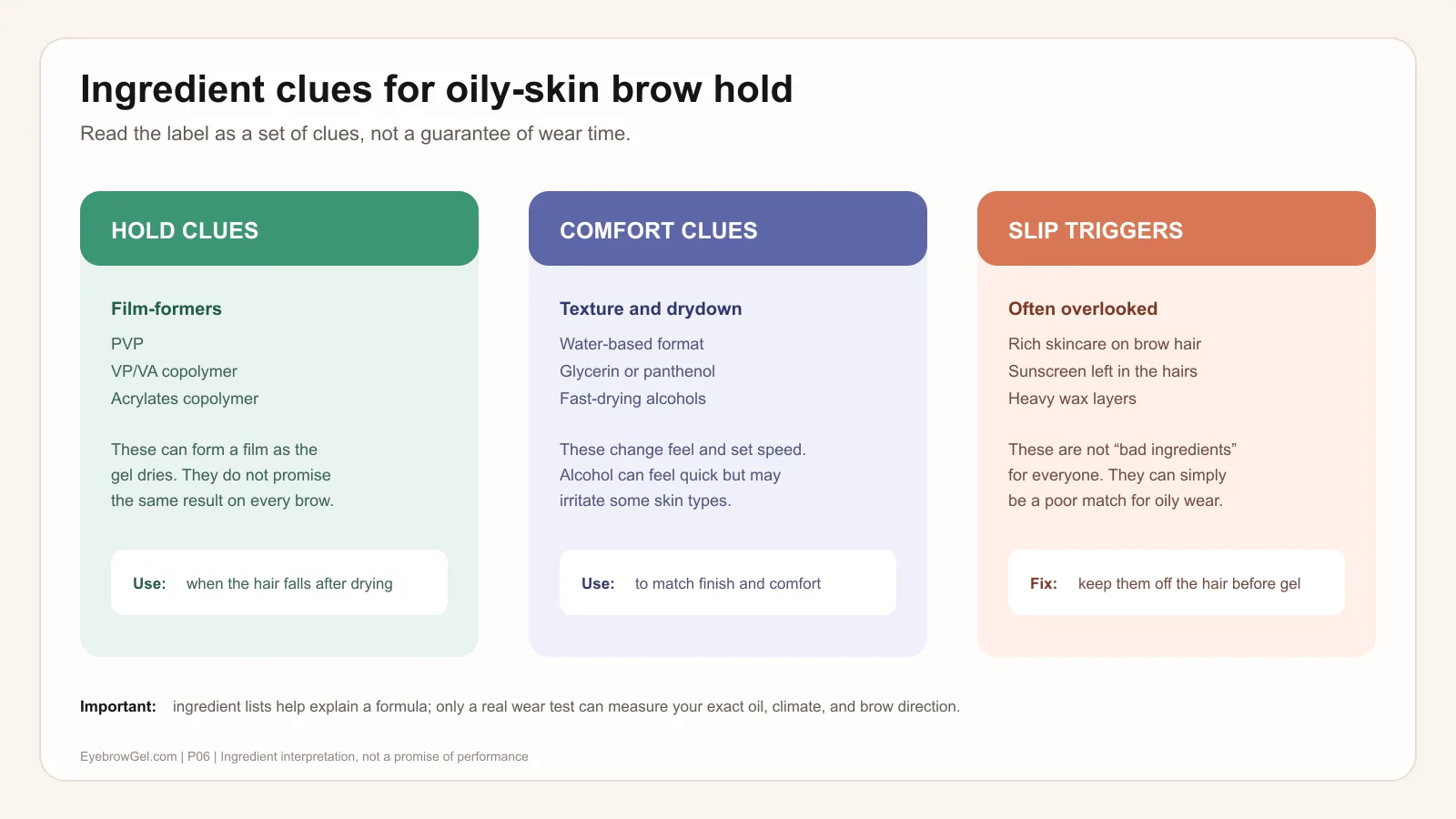
- Read formulas as clues: PVP, VP/VA copolymer, and acrylates copolymer are common hold-film clues, not universal wear guarantees.
- Change one variable at a time: otherwise you will not know whether the improvement came from prep, primer, powder, or the new gel.
On This Page
Why Eyebrow Gel for Oily Skin Breaks Down
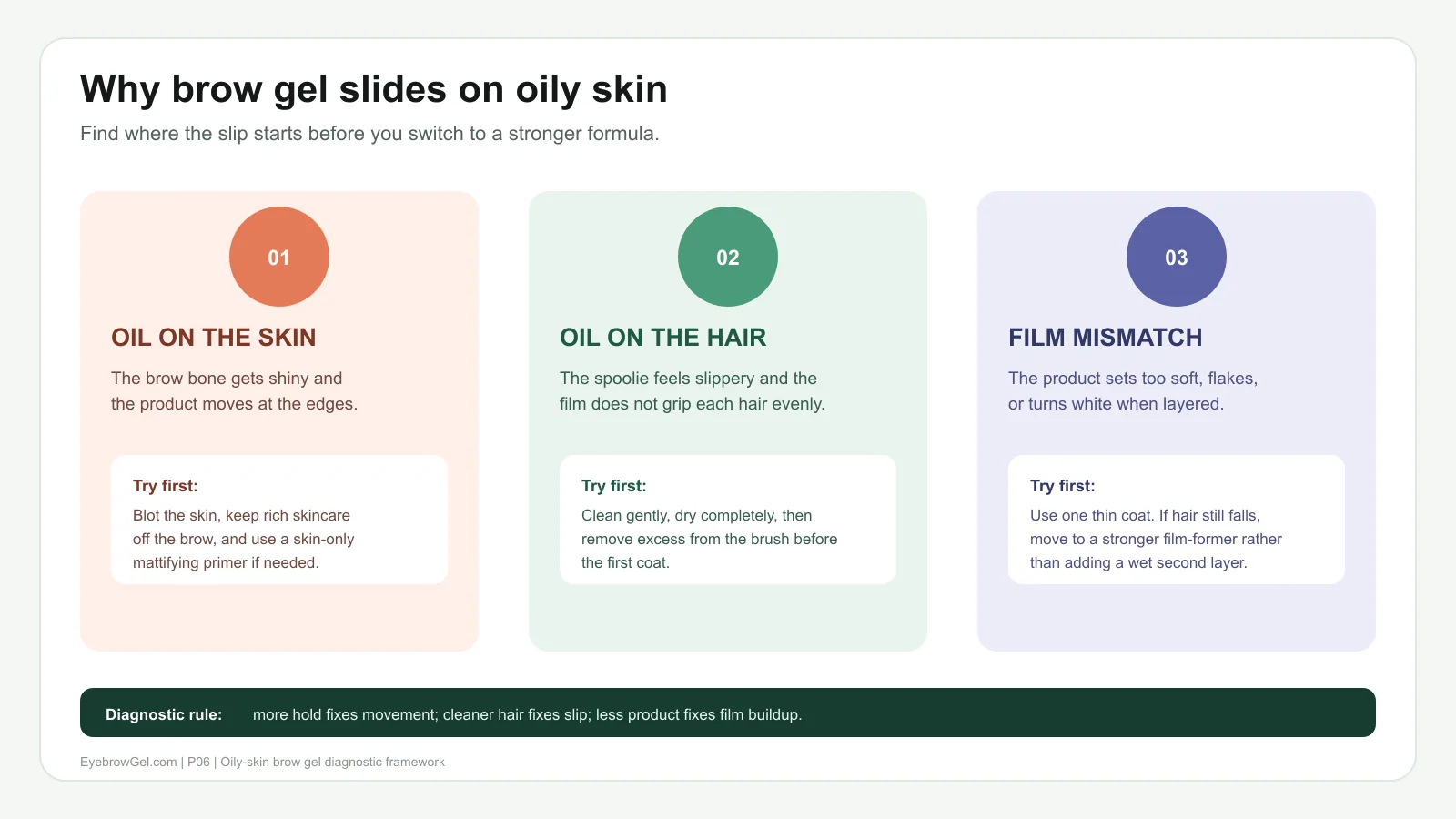
Oily skin can affect brow gel in more than one way. The brow bone may become shiny and loosen the edges of a product that has touched the skin. Oil may sit on the hair itself, especially after skincare or sunscreen has been blended through the brows. Or the formula may dry into a film that is too soft for the hair direction, too thick for comfortable layering, or prone to flaking when disturbed.
These failures look similar in a mirror, but they need different fixes. If the skin is shiny while the hair is still in place, work on surface prep. If the spoolie feels slippery and the hair never sets, clean and dry the brow before changing the product. If the hair sets and then drops, the formula or amount may be the issue. If it turns white or flakes, adding more gel is usually the wrong direction.
A product marketed as eyebrow gel for oily skin can still fail if it is applied over damp hair or rich skincare. The label describes an intended use; your prep and brow direction determine whether the film can do its job.
A useful one-brow test
For one application, leave one brow in your usual routine and use the clean-and-dry routine on the other. Take a quick photo when the gel dries, then compare both brows around midday. This is not a laboratory wear test, but it can reveal whether your main problem is preparation rather than product strength. If both brows fail in the same way, test one new formula on one brow on a different day.
The Science of Sebum and Hold Polymers
Sebum is the skin’s natural oil. On an oily or combination complexion, it can become noticeable around the forehead, brow bone, and nose during the day. That does not mean the skin is dirty, and it does not mean the answer is to scrub harder. The American Academy of Dermatology recommends gentle cleansing and points readers toward oil-free or water-based makeup and non-comedogenic products when managing oily skin.
Brow gel also has a separate job: it needs to leave a thin film around the hair that dries with enough flexibility and hold for the chosen shape. Film-forming polymers help create that set. In practice, oil, water, skincare residue, brush pressure, and the amount of product can all change how evenly the film coats the hair. That is a practical cosmetic explanation, not a promise that one polymer will defeat every climate or brow pattern.
For eyebrow gel for oily skin, the important distinction is between grip and oil control. A hold polymer may keep a clean hair in place, while blotting and careful skincare placement reduce the surface slip around it.
Think of the formula as one part of a system. A strong polymer cannot compensate for greasy hair, and a comfortable flexible gel may be exactly right for a fine brow that does not need maximum hold. The goal is enough film to control the hair without leaving a heavy layer on the skin.
Ingredients That Help an Eyebrow Gel for Oily Skin Last
When comparing an eyebrow gel for oily skin, look for a combination of film-former clues, a finish you can tolerate, and a texture that does not leave the hair slick. The front label may say long-wear, sweat-resistant, or non-sticky, but the ingredient list and application directions provide better context.
| Clue | What it may tell you | How to use the clue |
|---|---|---|
| PVP | A familiar film-forming polymer | Consider it a hold clue, then judge the drydown and finish. |
| VP/VA copolymer | Another film-forming system | Useful when hair falls after drying, not proof of all-day wear. |
| Acrylates copolymer | A film-former used in clear setting products | Check whether the full formula dries comfortable and flakes less for you. |
| Water-based format | A lighter starting texture for some users | Still apply it to dry hair; water-based does not mean oil-proof. |
For a concrete example, the official NYX The Brow Glue page lists PVP and describes a non-sticky natural finish with a brand claim of up to 16 hours. The correct takeaway is that it has a plausible hold mechanism and a stated performance position. It is not evidence that every oily brow will get 16 hours. Similarly, the official Benefit 24-HR Brow Setter page lists acrylates copolymer and amp-acrylates copolymer alongside a clear, fast-drying, natural-finish position.
Ingredients and Habits That Can Make It Worse
There is no universal list of bad brow-gel ingredients. The same wax, humectant, or quick-drying solvent can feel comfortable for one person and too slick or irritating for another. The more useful question is whether the full routine leaves a film on the hair that prevents your gel from gripping evenly.
- Rich skincare on the brow hair: moisturizer and sunscreen belong in a skincare routine, but excess left in the hair can make the spoolie slide.
- Heavy layering: a waxy pencil, creamy brow product, and gel can create a thicker film than any one product alone.
- Too much gel: excess product can stay wet-looking, transfer to the skin, or dry into flakes when brushed again.
- Repeated brushing after drydown: disturbing the film can create crumbs or white residue even when the formula is suitable.
- Aggressive degreasing: scrubbing or using a harsh routine may leave the skin uncomfortable without solving oil on the hair.
If your skin is sensitive, keep the experiment simple. The AAD advises gentle application and clean tools around acne-prone skin. Stop using any product that causes burning, swelling, persistent redness, or an eye reaction, and follow the product label or seek professional medical advice when needed.
How to Prep Oily Skin Before Applying an Eyebrow Gel for Oily Skin
The most reliable routine is deliberately boring: remove residue, let the hair dry, reduce shine on the surrounding skin, and apply a thin coat only where it is needed. Do not try to make the hair feel stripped. You want a clean surface, not brittle brows.
If eyebrow gel for oily skin keeps failing, repeat the routine with no primer and no powder first. A simple baseline makes it easier to see whether a later product is helping or adding another slippery layer.

- Clean gently: remove yesterday’s gel and any visible skincare residue. Use a clean spoolie or a soft tissue rather than scrubbing.
- Dry completely: pat the brow and wait until the hair no longer feels damp. A wet base can dilute the first coat and make the result uneven.
- Blot the skin: press blotting paper or tissue around the brow bone. Press; do not rub product through the hair.
- Keep face products away from the hair: if you apply moisturizer or sunscreen around the brow, give it time to settle and remove excess from the hair before gel.
- Use a tiny amount of powder only on skin if needed: avoid packing powder into the hair, where it can change the texture and make the gel look chalky.
- Wipe the spoolie: remove the excess on the mouth of the tube or a clean tissue. One thin coat is easier to build than a thick coat is to rescue.
- Apply tail to front: start at the tail and arch, then finish the inner brow with the cleanest part of the brush. Let it set without repeatedly combing.
Primer Tips: Does an Eyebrow Gel for Oily Skin Need One?
Does primer help brow gel last on oily skin? Sometimes, but placement matters more than the word primer. A matte face primer can reduce the slippery feel of the skin around the brow. It cannot reliably turn oily brow hair into a dry surface, and a silicone-rich or emollient primer brushed through the hair may make the gel move sooner.
With eyebrow gel for oily skin, primer should be treated as a small experiment, not a required step. Test the skin around one brow, keep the hair clean, and compare the result after the same amount of time.
Try a skin-only test: blot first, tap a pinhead-sized amount of primer onto the brow bone, let it set, and apply gel to the hair without dragging the brush across the skin. If the primer still feels slick, skip it. If it helps the edges stay cleaner without changing the hair texture, keep the amount small and use it only where the shine begins.
Powder follows the same rule. It may help the skin look less shiny, but powder in the hair can make a clear gel cloudy or increase visible residue. Test primer, powder, and gel separately so you can tell which step is helping.
If It Still Fails by Midday: Diagnose the Failure
Use the first visible failure, not the product’s marketing promise, to decide what to change. This table keeps the fix proportionate to the problem.
The best eyebrow gel for oily skin is the one that solves your first failure without creating a second one, such as flakes, shine, or a heavy-looking brow.
| What you see | Likely cause | Change first |
|---|---|---|
| Hair falls but skin is matte | The film is too flexible or too light for the hair direction | Use less movement, then try a stronger film-former. |
| Edges slide while hair stays shaped | Oil on the brow bone or product on the skin | Blot the skin and keep the next coat off the brow bone. |
| White flakes appear | Too much product, layered formulas, or brushing after drydown | Start with clean hair, use one thin coat, and stop brushing when set. |
| Brow looks wet and shiny | Excess gel or skincare contamination | Wipe the spoolie and remove residue from the hair before applying. |
| Tail disappears | The problem is missing hair, not missing hold | Use a fine pencil or pen for the bare area, then set real hair with gel. |
See Also: Best Brow Gels for Oily Skin
This page is the skin-type troubleshooting guide, so it does not rank a second list of products. Once you know whether the problem is slip, weak hold, flakes, or a missing tail, use the page that matches the next decision: our best eyebrow gel guide for the broad comparison, the long-lasting eyebrow gel guide for wear and application strategy, or the best drugstore eyebrow gel roundup when price is the main constraint. If the issue is a bare patch rather than oil, see our guide to the best eyebrow gel for sparse brows. The right eyebrow gel for oily skin depends on which of those problems you actually have.
Frequently Asked Questions
Why does my eyebrow gel for oily skin not stay?
Oil may be sitting on the brow bone, on the brow hair, or under a product film that is too soft for your hair direction. Clean and dry the hair, blot the surrounding skin, use a thin coat, and identify which part fails before changing formulas.
How can I make brow gel last on oily skin?
Start with clean, dry brow hair. Keep rich skincare and sunscreen from coating the hair, blot the brow bone, wipe excess from the spoolie, and let one thin coat dry without repeated brushing. If the hair still falls, compare a formula with a stronger film-former.
That sequence is a better starting point than searching for a magic eyebrow gel for oily skin, because it tells you whether the product or the surface is actually causing the failure.
Does primer help brow gel last on oily skin?
A tiny amount of matte primer may help on the skin around the brow, especially where the edges become shiny. Apply it to skin only and skip it if it feels slick. Primer through the hair can make the surface less grippy.
What are the best ingredients in an eyebrow gel for oily skin?
PVP, VP/VA copolymer, and acrylates copolymer are useful film-former clues. They are not guarantees. Judge them alongside drydown, finish, applicator control, and whether the full formula stays comfortable on your skin.
Should I powder my eyebrows before applying gel?
Powder the skin around the brow only if it helps reduce shine. Avoid packing powder into the hair because it can make clear gel look cloudy, change the texture, and increase visible residue. Blotting is the gentler first test.
Why does brow gel fade by midday on oily skin?
Midday fading can come from oil on the skin, movement from facial expressions, skincare transfer, or a film that cannot hold your hair direction. Take a photo at application and midday, then change only one step so the cause becomes visible.
Can eyebrow gel fill a sparse area that disappears during the day?
Gel can make existing fine hairs look denser, but it cannot draw a hair on bare skin. For a missing tail or patch, use a fine pencil or brow pen first and apply gel to the surrounding hair. Oil control will help the overall look last, but it cannot create missing hair.
The practical rule
More hold is not the answer to every oily-skin failure. Clean hair fixes slip, blotting fixes a shiny base, less product fixes film buildup, and a stronger formula fixes hair that falls after it is dry. Diagnose first, then change one variable.
Product details and ingredient lists were checked August 3, 2026. Formulas can change, so confirm the current label before use.
Compare hold systems
Use our comparison of current brow gel hold systems to separate water, sweat, oil, transfer, and duration claims before choosing a formula.